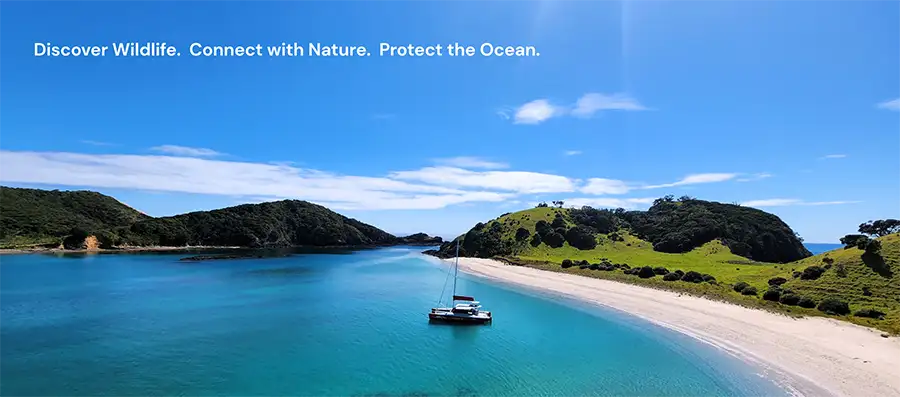
Dolphin watching in the Bay of Islands offers one of New Zealand’s most reliable marine wildlife experiences. Both bottlenose and common dolphins inhabit these sheltered subtropical waters year-round, making sightings highly likely on licensed wildlife cruises. As a designated Marine Mammal Sanctuary, the bay provides protected habitat where you can observe dolphins bow-riding, breaching, and hunting in their natural environment. From understanding the best times to visit to choosing licensed operators and practising responsible viewing, this guide covers everything you need to know about experiencing wild dolphins in the Bay of Islands.
Why the Bay of Islands is Brilliant for Dolphin Watching
The Bay of Islands is one of New Zealand’s premier destinations for dolphin watching, and the numbers back that up. Two dolphin species live in these sheltered subtropical waters year-round: bottlenose dolphins and common dolphins. Unlike many locations where you’re hoping wildlife shows up, dolphins actually reside here permanently. No seasonal migrations, no maybe-you’ll-see-them situations. This makes dolphin sightings remarkably consistent.
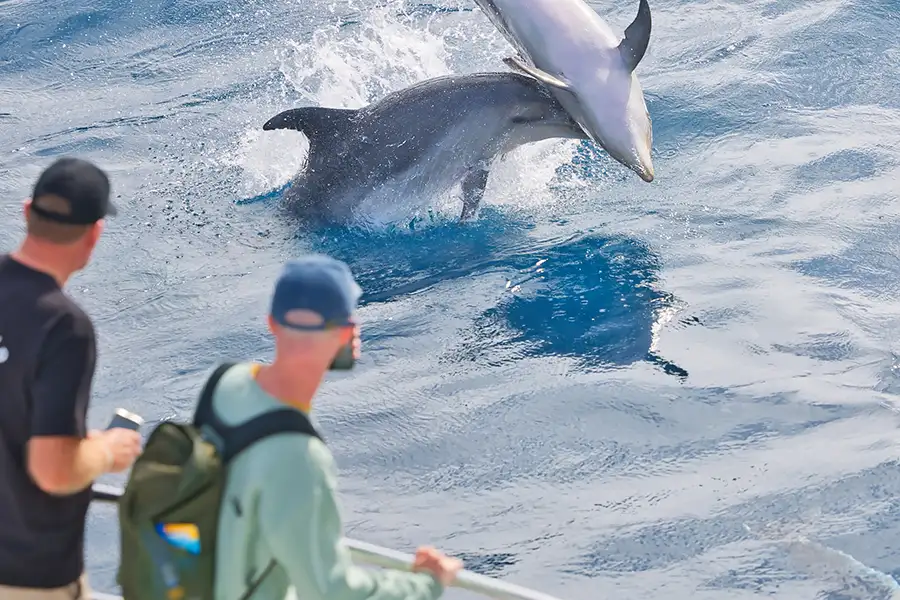
You’re watching wild animals going about their lives. Hunting fish through the channels between islands. Bow-riding in front of boats when it suits them. Occasionally launching themselves out of the water in displays that stop everyone in their tracks. The fact that dolphins live here means you’re seeing natural behaviour, not a performance.
The bay is also a designated Marine Mammal Sanctuary. Strict conservation rules protect these resident populations and regulate how people interact with them. Licensed operators know these rules inside and out, understand dolphin behaviour, and position you for encounters that respect both the animals and the regulations designed to keep them thriving.
Reliable sightings, protected habitat, and experienced licensed guides make the Bay of Islands one of the most dependable places in New Zealand to watch dolphins in the wild.
What Makes This Place Special
Several factors make the Bay of Islands exceptional for dolphin watching. The subtropical climate keeps water temperatures relatively warm, which these dolphin populations prefer. The sheltered nature of the bay provides calm waters that make viewing easier and more comfortable, even when open ocean conditions further out are rougher.
With 144 islands creating channels, bays, and passages, dolphins have varied habitat for hunting, socialising, and travelling. Common dolphins are frequently encountered in the bay, often travelling in large, energetic pods. Bottlenose dolphins, while fewer in number, are also regularly spotted.
Because both species reside here year-round rather than migrating like some whale species, your chances of seeing dolphins are high throughout the year. Licensed operators report dolphin sightings on well over 90% of trips, though it’s important to remember these are wild animals and guarantees don’t exist in nature.
The Marine Mammal Sanctuary status brings genuine conservation benefits. Vessel speed restrictions, approach protocols, and interaction limits keep encounters sustainable and reduce stress on dolphin populations. You’re not just watching dolphins; you’re watching them in a protected environment where their welfare is prioritised over human convenience.
The Dolphins You’ll See
Common Dolphins
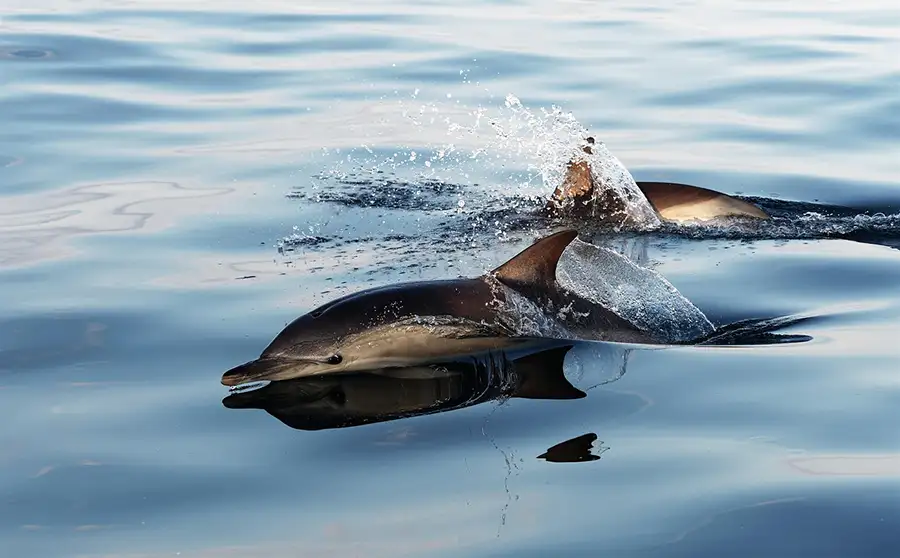
Common dolphins are the species you’re most likely to encounter on dolphin watching cruises in the Bay of Islands. Smaller dolphins, typically 2 to 2.5 metres long, are instantly recognisable by their distinctive hourglass pattern with pale yellow or cream patches along their sides contrasting against dark backs. Tall, curved dorsal fins stand out when they surface.
If bottlenose dolphins are the curious investigators, common dolphins are the acrobats. Regular aerial displays, spinning leaps out of the water. Enthusiastic bow-riding in front of boats. Large pods, sometimes dozens of animals, create spectacular displays when the entire group is active at the surface. Their diet consists primarily of small schooling fish and squid.
Bottlenose Dolphins

Bottlenose dolphins are less frequently seen than common dolphins but are still regularly encountered in the bay. The larger of the two species, reaching up to 4 metres long and weighing up to 300kg. Short beaks, robust bodies, distinctively hooked dorsal fins.
Notoriously curious, often approaching boats and swimmers to investigate. Their intelligence shows in their behaviour: coordinated hunting strategies, social play, complex communication through clicks, whistles, and body language. Pods range from a few individuals to over 20, with social structures including family groups and temporary associations.
Watch for mothers teaching young calves to hunt or navigate. This learned knowledge rather than pure instinct demonstrates just how intelligent these animals are. The Bay of Islands bottlenose dolphin population is classified as nationally endangered, making respectful, responsible viewing particularly important. The Marine Mammal Sanctuary regulations help protect this vulnerable population while still allowing people to experience these remarkable animals in the wild.
Best Times for Dolphin Watching
Year-Round Viewing
Dolphins are present in the Bay of Islands throughout the year because they live here permanently. However, their behaviour and visibility change with the seasons, which affects your viewing experience.
Summer (December to February)
Peak season for dolphin watching. Dolphins are most active during warmer months, staying closer to the surface and within the sheltered bays. Water temperatures reach 20 to 23°C. More dramatic aerial displays, bow-riding, and social interaction between pods. Calmer seas and better visibility make spotting dolphins easier from both boats and shore.
Summer is also peak tourist season, meaning more boats on the water and higher prices.
Autumn (March to May)
Arguably the best time for dolphin watching. Summer-like conditions with water temperatures still warm (18 to 21°C) and dolphins remaining active and visible, but with significantly fewer tourists. Prices drop slightly, boats are less crowded, and you’re more likely to have encounters without competing with multiple vessels. Weather remains relatively stable, though you might get the occasional rough day.
Winter (June to August)
The quietest season, but dolphins are still regularly spotted. Water temperatures drop to 15 to 17°C. Dolphins tend to range into deeper waters, making them slightly less predictable. Aerial displays become less frequent in cooler water. Seas can be rougher with stronger winds and larger swells, occasionally cancelling cruises.
Fewer tourists, better prices, and you’ll often have dolphin encounters entirely to yourself. Clear winter days offer excellent visibility and dramatic lighting for photography.
Spring (September to November)
Dolphin activity increases as waters warm (17 to 20°C) and becomes more predictable. Weather becomes more settled, though spring winds can still create choppy conditions. This is an excellent shoulder season combining improving wildlife activity with moderate crowds.
Seal pups are born in late spring, which sometimes attracts orcas to the bay, potentially offering additional marine mammal sightings.
Time of Day
Early morning (6 to 9am) often brings the calmest seas and best light for photography. Dolphins are actively feeding after the night, and there are fewer boats on the water.
Midday (10am to 2pm) is the busiest time for tour departures, with good conditions but potentially more crowded viewing.
Late afternoon (3 to 6pm) provides dramatic lighting for photography, fewer boats, and dolphins often become more active as temperatures cool. However, afternoon sea breezes can make waters choppier.
Licensed Dolphin Watching Operators
Only two operators hold Department of Conservation licences to conduct commercial dolphin watching in the Bay of Islands Marine Mammal Sanctuary: Fullers Bay of Islands and Explore Group. This limited licensing ensures sustainable tourism that doesn’t overwhelm dolphin populations or degrade their habitat.
Both operators run daily cruises throughout the year (weather permitting), following the same strict DOC protocols for approaching and viewing marine mammals. Their crews are trained in marine mammal identification, behaviour, and conservation, and they contribute sighting data to ongoing DOC research programmes.
Fullers Bay of Islands: Hole in the Rock Dolphin Cruise
Fullers operates the most comprehensive dolphin watching experience in the bay.
Duration: 4.5 hours
Route: Departs Paihia, travels through the inner islands to Cathedral Cave and the famous Hole in the Rock, returning via Cape Brett. Multiple stops including Urupukapuka Island for beach time and facilities.
Departure times: Multiple daily departures year-round (check website for current schedule)
Vessel: Large, stable catamaran with indoor and outdoor seating, onboard café, and toilet facilities
Commentary: Detailed narration covering marine life, history, geology, and Māori culture throughout the cruise
What’s included: Dolphin viewing, island stop with beach access, passage through or around the Hole in the Rock (conditions permitting), all commentary and guidance
Booking: Free cancellation up to 24 hours before departure
Who it suits: Families, first-time visitors, those wanting a comprehensive Bay of Islands experience combining dolphins with iconic landmarks
Notable: The Hole in the Rock passage is spectacular when conditions allow. The vessel size means very stable conditions even in moderate seas, ideal for those concerned about seasickness. Year-round operation.
Explore Group: Dolphin Eco Cruise
Explore Group takes a more wildlife-focused approach to dolphin watching.
Duration: Approximately 5 to 5.5 hours
Route: Similar to Fullers, through the islands to the Hole in the Rock and Cape Brett, with extended time spent observing wildlife when encountered
Departure times: Daily during season (late October to late April), morning departure around 9am
Season: Late October to late April (summer season only)
Vessel: Purpose-built wildlife viewing vessel with 360-degree viewing decks, inside cabin, and hydrophone for listening to dolphins underwater
Commentary: Marine biology-focused commentary emphasising animal behaviour, ecology, and conservation rather than general tourism information
What’s included: Dolphin viewing, island stop, hydrophone listening when dolphins are present, wildlife identification guide, contribution to dolphin research programmes
Note: If you don’t see marine mammals on your cruise, you get a complimentary return voucher valid for 12 months (subject to availability, standby basis)
Booking: Free cancellation up to 24 hours before departure
Who it suits: People genuinely interested in wildlife and conservation, bird watchers, families with children interested in animals, anyone wanting a slower, more observation-focused experience
Notable: Reports spotting marine mammals on 90% of trips. Summer-only operation means it doesn’t run during winter months (May to September).
Carino Wildlife Cruises Island & Wildlife Day Cruise
Carino Wildlife Cruises takes a different approach to Bay of Islands dolphin watching. Rather than racing to the Hole in the Rock, this six-hour sailing trip focuses on wildlife and conservation. Captain Vanessa McKay operates the only yacht in the Bay of Islands with a DOC permit to view marine mammals, running a genuine conservation operation where every cruise collects wildlife data for marine research.
Duration: 6 hours (9am to 3pm)
Departures: Daily from Paihia Wharf at 9:00am (check current schedule)
Vessel: 50ft catamaran Carino NZ with genuine sailing under wind power when conditions allow
Island stop: Approximately 1 hour at a DOC-managed pest-free sanctuary island with hiking tracks, swimming, and snorkelling (all equipment provided)
Conservation focus: Data collection on every cruise, portion of ticket supports Carino Marine Explorers Trust (registered charity), marine education programs for local children
Booking: Check cancellation terms when booking
Who it suits: People who prioritise wildlife and conservation over landmark tourism, families with children interested in nature, anyone who wants their tourism dollars supporting genuine conservation work, sailing enthusiasts
Notable: Only yacht with DOC marine mammal viewing permit. Crew knows individual bottlenose dolphins by name. Smaller, family-run operation with authentic eco-tourism focus. Optional BBQ lunch available for purchase onboard.
What to Expect on a Dolphin Watching Cruise
Dolphin watching cruises in the Bay of Islands follow similar patterns. Depart from Paihia or Russell, cruise out through the islands, crew keeping watch for dolphin activity. When dolphins are spotted, the boat slows and approaches following strict DOC protocols: maintaining required distances, approaching from behind or the side (never head-on), limiting interaction time.
What you see depends on the dolphins’ mood and activities. Sometimes actively feeding, working cooperatively to herd schools of fish. Other times socialising, playing, or teaching young calves. Bow-riding is common, where dolphins surf the pressure wave created by the boat’s movement. Breaching (leaping out of the water) happens regularly, particularly with common dolphins, though it’s unpredictable.
Crew commentary covers what you’re seeing: species identification, individual behaviours, pod dynamics, and conservation information. Experienced guides can often recognise individual dolphins by distinctive markings or fin shapes, particularly long-term residents.
Remember these are wild animals, not performers. Sometimes dolphins are curious and approach boats. Sometimes busy hunting and largely ignore vessels. Sometimes resting and the boat keeps its distance to avoid disturbing them. That unpredictability is what makes the experience genuine.
Important: You Cannot Swim with Dolphins
Swimming with dolphins is not permitted in the Bay of Islands. The Marine Mammal Sanctuary regulations prohibit anyone from being in the water within 300 metres of any marine mammal. This rule protects both humans and dolphins. Dolphins can accidentally injure swimmers, and human presence in the water disrupts natural behaviours including feeding, resting, and socialising.
If a dolphin watching cruise includes a swimming stop, that’s at an island beach, completely separate from dolphin viewing. Don’t book expecting to swim with dolphins because it won’t happen, and operators who promise it are operating illegally.
Responsible Dolphin Watching
The Bay of Islands is a Marine Mammal Sanctuary with strict rules protecting dolphins and other marine life. These regulations exist because unregulated vessel traffic and human interaction can disrupt feeding, breeding, and resting behaviours, causing long-term harm to dolphin populations.
Rules for Private Vessels
If you’re on a private boat, kayaking, or paddling, these rules apply:
- Stay at least 300 metres away from any dolphin, whale, or seal in the water
- If a dolphin approaches within 300 metres, stop immediately and put your engine in neutral. Stay stopped until they move more than 300 metres away
- Travel at 5 knots or less within 300 metres of marine mammals
- No one is allowed in the water within 300 metres of any marine mammal
- Never chase, encircle, or attempt to touch marine wildlife
Penalties for violations range from infringement fees of $600 to $800, with maximum fines up to $1,600. Serious prosecutions that harm marine mammals can result in fines up to $100,000 and imprisonment. These aren’t empty threats. DOC actively monitors the sanctuary and prosecutes violations.
For complete regulations, see the Department of Conservation website.
Why These Rules Matter
These regulations aren’t bureaucratic obstacles. They’re based on scientific research showing that repeated disturbance can:
- Force dolphins to abandon feeding areas or resting spots
- Disrupt mother-calf bonding and teaching behaviours
- Increase stress levels affecting health and reproduction
- Alter natural movement patterns and habitat use
By following these rules, whether on a licensed cruise or your own vessel, you’re ensuring that future generations can experience the same incredible dolphin populations that make the Bay of Islands special.
Practical Information for Dolphin Cruises
What to Bring
Dolphin watching cruises have specific requirements beyond general Bay of Islands packing. Even in summer, bring a warm, windproof jacket. It’s significantly cooler on the water with wind and spray, and temperatures drop quickly when the boat is moving.
Polarised sunglasses help spot dolphins beneath the surface by reducing glare. A camera with good zoom is essential for photographing dolphins from the required distance (phone cameras often don’t zoom enough for good shots). Binoculars help you spot distant dorsal fins and observe behaviour details.
If you’re prone to seasickness, take motion sickness medication 30 minutes before departure. Seas can be choppy even when they look calm from shore. Layered clothing is important because temperature varies significantly between on-deck (cold and windy) and in-cabin (warm).
For complete packing advice including sunscreen, hats, and general Bay of Islands essentials, see our Planning Your Visit guide.
Setting Realistic Expectations
Dolphin sightings are extremely likely in the Bay of Islands, with licensed operators reporting success rates over 90% most of the year. However, these are wild animals in their natural environment, not a zoo or aquarium.
Weather conditions significantly impact both sightings and viewing comfort. Licensed operators won’t take you out in unsafe conditions, and they can’t control what wildlife appears. What operators can guarantee is responsible, educational, and respectful encounters that prioritise animal welfare while giving you the best possible chance to see the Bay of Islands’ incredible resident dolphin populations.
Shore-Based Dolphin Viewing
While licensed boat cruises offer the best opportunities to see dolphins up close, several coastal locations provide excellent shore-based viewing if you have binoculars or a good zoom lens:
Tapeka Point, Russell: Rocky headland with elevated views across the bay, accessible via walking track
Flagstaff Hill, Russell: The highest point in Russell offers panoramic views over the entire bay for scanning dolphin activity
Paihia Waterfront: Easy access viewing from the beach and boardwalk where dolphins occasionally swim close to shore
Urupukapuka Island: Multiple viewpoints accessible by ferry, with elevated spots for watching dolphin activity in the channels below
Best shore viewing times are typically early morning (6 to 9am) and late afternoon (4 to 7pm) when dolphins are most active and lighting conditions are ideal for spotting movement on the water.
Planning Your Dolphin Watching Experience
Dolphin watching in the Bay of Islands delivers one of New Zealand’s most reliable marine wildlife experiences. Resident dolphin populations, licensed operators who prioritise animal welfare, and a protected Marine Mammal Sanctuary create conditions where you’re watching wild dolphins while respecting both the animals and the environment they depend on.
Book either Fullers’ comprehensive Hole in the Rock cruise or Explore Group’s wildlife-focused Dolphin Eco Cruise and you’re supporting responsible tourism that contributes to ongoing conservation and research.
Wild animals being wild animals means the experience isn’t guaranteed. But the odds are strongly in your favour. When dolphins decide to bow-ride your boat or launch themselves out of the water right in front of you, you’ll understand why the Bay of Islands is considered one of the best places in New Zealand to encounter these remarkable animals.For comprehensive information about all marine life in the Bay of Islands including whales, seals, and penguins, see our Marine Life Guide.

Leave a Reply
You must be logged in to post a comment.