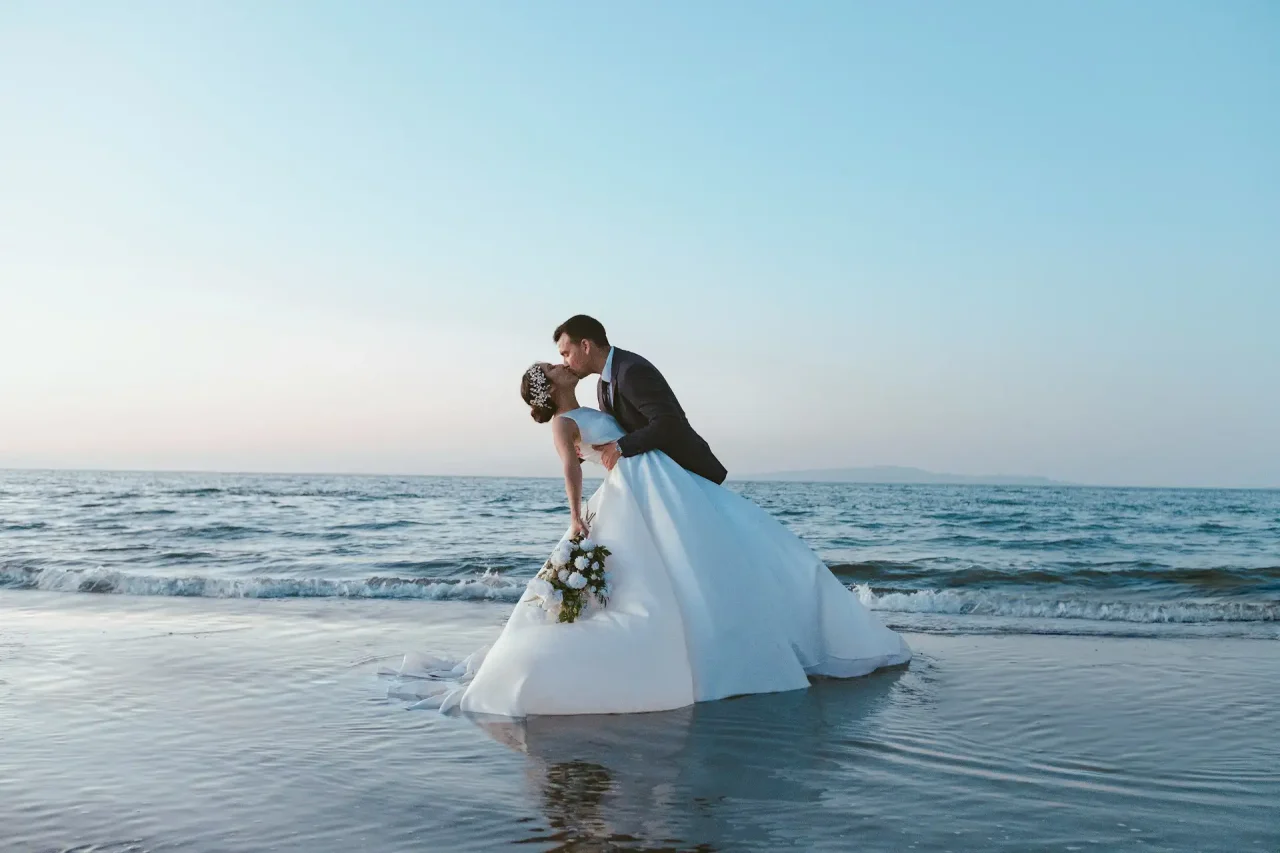
The Bay of Islands is one of New Zealand’s most spectacular wedding destinations. With 144 islands, sheltered harbours, white-sand beaches, and the kind of light that photographers dream about, it draws couples from across New Zealand and overseas. But that same beauty comes with some practical complexities that make choosing the right photographer here a little different from booking one for a city venue.
Book Well in Advance
The Bay of Islands is a destination wedding location, which means popular weekends book out fast. Most couples planning a summer wedding, roughly November through March, should expect good photographers in the region to have limited availability by mid-year. If your date is flexible, locking in your photographer before your venue can save you from having to compromise on one or the other.
For destination photographers travelling from Auckland or further afield, lead time matters even more. They need to plan travel, accommodation, and often schedule other work around the trip. Giving yourself 12 to 18 months is not excessive for a peak-season Bay of Islands wedding. It also gives you more options when it comes to shortlisting, rather than choosing from whoever still has your date free.
A good starting point when building your longlist is to browse a directory of New Zealand wedding photographers, where you can filter by region and review portfolios before reaching out directly. Note that many professional wedding photographers travel outside their region for shoots, so there’s no harm in contacting a photographer outside the Bay of Islands if you really love their work.
Look for Local Knowledge, Not Just a Good Portfolio
A strong portfolio tells you a photographer is talented. It does not tell you whether they know the difference between shooting on Urupukapuka Island at low tide versus high tide, or how the afternoon light falls on the clifftops near Cape Brett. The Bay of Islands has enough location-specific quirks that local familiarity genuinely matters.
Some of the region’s most photogenic spots involve boat access, tidal beaches that disappear at high water, or bush settings where the light changes dramatically depending on cloud cover. A photographer who has worked in the area will have a feel for these things. They will know when golden hour hits at Haruru Falls, which island beaches are worth the extra travel time, and where to position you to avoid the harsh midday sun that flattens everything in a Northland summer.
When you make contact, ask directly whether they have shot at your venue before. If they have not, ask how they plan to scout the location beforehand. A photographer who shows up at an unfamiliar venue on your wedding day without any preparation is a risk you do not need to take.
Have a Weather Contingency Plan
Northland weather can change quickly. A clear morning does not guarantee a clear afternoon, and a light overcast can actually produce better photographs than harsh direct sun. What you want to understand is how your photographer handles the unexpected.
Ask them directly: what happens if it rains? What indoor or covered options do they know near your venue? How do they adjust their approach in flat grey light versus dramatic storm light? Experienced photographers often produce some of their most striking work on overcast days. Less experienced ones panic. The answer to this question will tell you a lot about how composed they will be on the day itself.
If your wedding includes any boat travel, factor in the possibility that rough conditions could change timing or limit access to certain spots. A photographer who has worked in coastal environments will understand this and plan around it rather than treating it as a disaster.
Review Full Galleries, Not Just Hero Shots
Every photographer has a collection of their best images. What you actually want to see is a complete gallery from a single wedding, start to finish. This will show you how they handle the less glamorous parts of the day: the getting-ready shots in a small hotel room, the reception speeches under fluorescent lights, the candid moments between formal poses. Consistency across a full day is the mark of a professional.
Pay particular attention to how they work with different light conditions. A Bay of Islands summer wedding might go from bright overcast morning light to golden late afternoon sun to indoor reception lighting within a few hours. You want a photographer who handles all of those well, not just the flattering outdoor portraits.
Look at how people actually look in the photos. Do they appear relaxed and natural, or stiff and posed? The best wedding photography captures real moments. If every image looks like it required five minutes of direction, the couple probably spent their wedding feeling like props rather than participants.
Make Sure the Style Is the Right Fit
Wedding photography broadly divides into two camps: documentary and posed. Documentary photographers work mostly in the background, capturing the day as it happens with minimal direction. Posed photographers take a more structured approach, organising group shots, formal portraits, and staged moments. Most work somewhere in between, but every photographer leans one way or the other.
There is no right answer, but there is a right answer for you. If you hate being photographed and want the day to feel natural, a photographer who spends two hours on formal portraits is going to frustrate you. If family group shots and a comprehensive set of posed portraits are important to you, a pure documentary shooter may leave you without the images you actually wanted.
Be honest about this when you speak to photographers. Tell them what you value and ask how they typically structure a day. Their answer will tell you whether your expectations are aligned before you sign anything.
Ask About Travel Costs and Logistics Upfront
If your photographer is travelling from outside the region, travel and accommodation costs are typically charged on top of their base fee. These can vary significantly depending on where the photographer is based and how far your venue is from Kerikeri or Paihia. Always get a full cost breakdown before agreeing to anything.
Also confirm what is included in the package: how many hours of coverage, whether a second shooter is part of the deal, how many edited images you will receive, the turnaround time for delivery, and what format the final files come in. Some photographers deliver online galleries, others provide USB drives or printed albums as part of the package. None of this should be a surprise after the wedding.
Ask about backup equipment. A professional photographer should carry at least two camera bodies to every wedding. Equipment failure happens, and a photographer who shows up with a single camera and no backup is not someone you want responsible for your wedding photographs.
Read the Contract Before You Sign
A written contract is not optional. It should clearly state the date, location, hours of coverage, total cost and payment schedule, cancellation terms, and what happens if the photographer is unable to attend due to illness or emergency. If a photographer is reluctant to provide a contract, that is a significant red flag.
Check the image usage rights carefully. Most contracts give the photographer the right to use images for portfolio and promotional purposes. That is standard and reasonable. What you want to confirm is that you also have the right to print, share, and use your own wedding photographs freely.
Pay attention to the cancellation and postponement clauses, particularly given that Bay of Islands weddings can sometimes be disrupted by weather or access issues. Understanding what is refundable and under what circumstances will save you a difficult conversation later.
The Photographer Matters as Much as the Venue
The Bay of Islands will do a lot of the work for you. The light, the water, and the landscape are extraordinary. But capturing all of that in a way that also tells the story of your day takes skill, preparation, and the right person behind the camera. Take the time to do your research, ask the hard questions, and choose someone whose work genuinely excites you.
The photographs outlast the flowers, the food, and the dress. Getting the right person behind the camera is one of the few wedding decisions that genuinely cannot be undone after the day.

Leave a Reply
You must be logged in to post a comment.