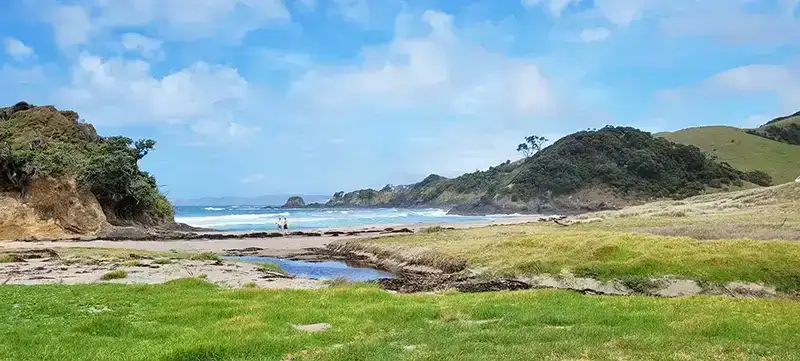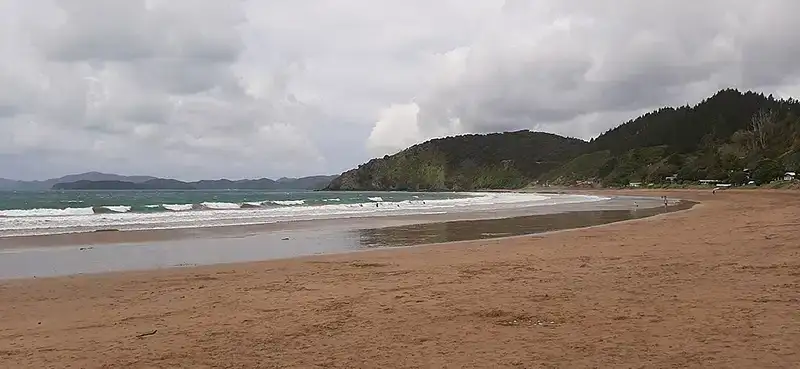
Long Beach lives up to its name. This one-kilometre stretch of white sand is Russell’s premier family beach. You can reach it via a scenic 20-minute walk over Flagstaff Hill with views along the way, or a short drive from Russell township. Swimming is safe at all tides, and the beach has plenty of space to spread out. Dolphins are frequently spotted here, and there’s a shag colony nearby for wildlife enthusiasts. The lack of nearby shops means packing a picnic, but that just adds to the peaceful atmosphere. Views across to the islands and Cape Brett peninsula are stunning.
Long Beach and Russell
Long Beach sits on Russell’s eastern shore, facing the Bay of Islands rather than back toward Paihia. This eastward orientation gives it a different character from Kororareka Bay, with more open water views and a feeling of being out in the bay proper rather than tucked into the harbour.
The beach’s Māori name, Oneroa, literally means “long beach.” Early European settlers simply translated it. The name is perfectly descriptive.
The first holiday baches along this beach were built in the 1920s, and its popularity increased after World War II as more New Zealanders had the means and mobility for beach holidays. Today, Long Beach remains a classic Kiwi beach. The kind of place where families return year after year, where locals walk their dogs early morning, and where the pace is deliberately slow.
The beach’s location means it’s just far enough from Russell township to feel like an escape, but close enough that you can easily walk there and back. This balance makes it accessible without being crowded, peaceful without being remote.
Getting There and Access
Long Beach is about 1.5km from Russell township, accessible by car or on foot. Both routes have their appeal.
Walking via Flagstaff Hill: The most scenic route is the 20-minute walk from Russell township over Flagstaff Hill (Maiki Hill). This historic hill, where Ngāpuhi chief Hōne Heke famously cut down the British flagstaff in the 1840s, offers spectacular 360-degree views from the summit. The walk takes you up from the Russell boat ramp, across the top of the hill with its memorial and viewing platforms, then down the other side to Long Beach. It’s a proper little adventure that combines Russell’s history with beach time.
The track is well-maintained but does involve a reasonable climb up and over the hill. Most people with moderate fitness manage it comfortably, though it might be challenging for very young children or those with mobility limitations. The views from the top are worth the effort, looking out across the entire Bay of Islands.
By Car: Alternatively, drive from Russell township via Wellington Street and York Street, following signs to Long Beach. The drive takes about 5 minutes. This route is easier for families with young children, those carrying beach gear, or anyone who prefers not to walk the hill.
Getting to Russell from Auckland takes roughly 3 hours, then add the short drive or walk to Long Beach. Most visitors base themselves in Russell or Paihia and make Long Beach a day trip destination.
Parking is available at the beach, with space along the road near the northwestern end where the toilets are located. Parking is free but can fill up on busy summer weekends and holidays. The parking area is more spacious than in Russell township, and you’ll usually find a spot even during peak times.
The Beach
Long Beach features white sand that stretches for roughly one kilometre, creating that sense of space that makes it so popular with families. Sand is soft and clean, perfect for laying out towels, building sandcastles, or playing beach games. Unlike some Bay of Islands beaches that can be pebbly, Long Beach is proper sand all the way.
The beach faces east and slightly north, looking out across the Bay of Islands toward the outer islands and Cape Brett peninsula. The views are stunning, particularly on clear days when you can see right out to the cape. The more open water position means you get a real sense of the bay’s scale, with islands dotting the water and the peninsula forming a dramatic backdrop.
Behind the beach, you’ll find the holiday homes and baches that have been here since the 1920s, set back from the sand with gardens and native plantings. These aren’t massive mansions but traditional Kiwi beach houses, adding to Long Beach’s unpretentious, family-friendly character.
The beach has grassy areas at the northwestern end near the toilets, providing spots for picnics with a bit of shade. Much of the beach has limited natural shade, so bring umbrellas or pop-up tents if you’re planning to spend several hours there during summer.
At low tide, the beach widens considerably and the sand becomes firmer near the waterline, excellent for walking or beach cricket. At high tide, the water comes further up but there’s still plenty of beach. The gentle curve of the bay creates a sheltered feeling even though it faces more open water than Russell’s harbour beaches.
Swimming and Water Safety
Long Beach offers safe swimming at all tides, one of its main attractions for families. The beach slopes gradually into clear water, with gentle conditions most days. The eastern exposure means it’s more protected from southerly swells than you might expect, while still catching enough breeze to keep things fresh on hot summer days.
The beach isn’t patrolled, so you’re responsible for your own safety. Generally calm conditions and safe swimming at all tides make it suitable for families, but watch children at all times in and near water. Be aware of boat traffic, though Long Beach sees less than the busier harbour areas.
Northland Regional Council monitors water quality at Bay of Islands beaches during summer. Long Beach typically has good water quality suitable for swimming. After heavy rain, avoid swimming for 2-3 days. Check the LAWA website for current water quality status, particularly if there’s been recent rain.
Water clarity at Long Beach is generally excellent. The white sand and clear water create that classic tropical beach appearance that makes the Bay of Islands famous. Water temperature ranges from 20-23°C (68-73°F) in summer to around 15-17°C (59-63°F) in winter.
The safe conditions at all tides mean you don’t need to time your visit as carefully as at tide-dependent beaches. This flexibility makes Long Beach particularly good for families with young children who need predictable swimming conditions.
Wildlife Watching
Long Beach is known for frequent dolphin sightings. Pods regularly visit the bay, particularly early morning or late afternoon. If you see dolphins, enjoy watching from the beach but don’t attempt to swim with them, as swimming with dolphins is no longer permitted in the Bay of Islands to protect the endangered bottlenose dolphin population.
A shag colony is located nearby. Bring binoculars if you’re interested in birdwatching.
Activities
The safe swimming conditions and spacious beach make this ideal for families. The white sand provides excellent space for beach games, sandcastle building, and general play. Many families spend entire days here, swimming, playing, and picnicking without feeling crowded even when the beach is well-used.
The beach is popular for launching kayaks and small boats. The calm conditions and interesting destinations nearby (islands, the shag colony, exploring the coastline) make it a good base for paddling adventures. The boat ramp at the northwestern end makes launching easy for those with their own boats.
Parts of Long Beach allow dogs on leash, making it a favourite with locals. This is relatively unusual for Bay of Islands beaches, particularly in summer, so if you’re travelling with dogs, Long Beach offers one of the better options. Always keep dogs on leash, under control, pick up after them, and observe any seasonal restrictions. Check current Far North District Council regulations for specific dog access areas and times.
With no shops or cafes nearby, picnicking is the standard approach to eating at Long Beach. The grassy areas near the northwestern end provide good spots to set up, and the relaxed atmosphere encourages leisurely meals. Pack a chilly bin, bring plenty of food and water, and make a day of it.
Beyond the beach itself, you can walk the coastal areas or return via Flagstaff Hill for the views. The one-kilometre beach length makes it good for proper beach walks, particularly at low tide when the firm sand makes walking easy.
Facilities and Dining
Long Beach has limited but adequate facilities:
On Site:
- Public toilets at the northwestern end
- Grassy areas for picnics
- Boat ramp
- Rubbish bins
- Parking area
What’s Not Here: No shops, cafes, restaurants, showers, or playgrounds. This is a bring-everything-yourself beach. The lack of commercial development is part of Long Beach’s appeal for many visitors, preserving the peaceful, unspoiled atmosphere.
Russell township (1.5km away) has shops, cafes, and restaurants. Most visitors stop in Russell to grab supplies before heading to Long Beach, or they pack everything from their accommodation.
Pack a proper picnic with all food and drinks for your time at the beach. Bring a chilly bin with ice to keep things cold. Pack more water than you think you’ll need, especially in summer. Remember to take all rubbish with you or use the provided bins.
Planning Your Visit to Long Beach
Important Rules:
- No lifeguard patrols; you’re responsible for your own safety
- Watch children at all times in and near water
- Dogs allowed on leash in designated areas (check current regulations)
- Pick up after dogs and take waste with you
- Pack out rubbish or use provided bins
- No fires on the beach
- Be considerate of residents in the beach houses
What to Bring:
- All food and drinks for the day (no shops at the beach)
- Chilly bin with ice
- Sunscreen (New Zealand sun is intense; reapply regularly)
- Hat and sunglasses
- Beach umbrella or pop-up tent for shade
- Swimwear and towels
- Beach toys and games
- Binoculars for dolphin and bird watching
- Camera for the stunning views
Best Times to Visit: Early morning offers the calmest conditions, best wildlife viewing opportunities, and fewer people. Mid-morning to early afternoon is peak family time when the beach is busiest. Late afternoon provides comfortable temperatures and beautiful light across the islands and cape. Weekdays are generally quieter than weekends, though Long Beach rarely feels overcrowded due to its size.
For broader information about planning your Bay of Islands visit, including seasonal weather patterns and booking advice, check the full planning guide.
Who Long Beach is Best For
Families wanting safe swimming at all tides with plenty of space to spread out. Dog owners looking for a beach where dogs are allowed. Visitors who appreciate a more traditional, uncommercialised beach experience. Those who don’t mind packing everything themselves and prefer peace over convenience.
The beach works well for people staying in Russell who want a different beach experience from the township waterfront, and for visitors who enjoy combining a scenic walk (over Flagstaff Hill) with beach time. The regular dolphin sightings appeal to wildlife enthusiasts, while the spacious sand and safe swimming make it perfect for families with children of all ages.
Map
Sorry, no records were found. Please adjust your search criteria and try again.
Sorry, unable to load the Maps API.