
A day out fishing in the Bay of Islands will push the same buttons in you today that toy shops and ice cream sundaes pressed as a child, whether you’re an experienced angler or picking up a rod for the first time. The sheltered waters are abundant with healthy fisheries all year round, and the combination of tropical currents meeting temperate water creates exceptional fishing conditions.
This coastline holds most National and World records for Snapper, Yellowtail Kingfish, and Striped Marlin. Other thriving species include kahawai, trevally, hapuku, tarakihi, John Dory, red gurnard, scallops, oysters, and mussels.
Most fishing trips start from Paihia, Russell, and Opua. From these bases, you’re just a short boat ride from 144 islands and countless fishing spots. Whether you want to target trophy snapper, battle kingfish, or simply get out on the water, the Bay of Islands delivers.
Land-Based or Offshore Fishing?
There are plenty of reputable and affordable fishing charters in the Bay of Islands, with prices starting in double figures. Even if you have no gear of your own and have never filleted a fish in your life, you can book your fishing trip today knowing all the material and practical considerations will be taken care of.
Fishing Charters
Recreational Fishing Charters in the Bay of Islands provide everything: rods, reels, tackle, bait, and safety gear. The skippers know where fish are likely to be on any given day and can adapt to changing conditions. Many also offer fish cleaning and filleting services.
Gamefishing Charters in the Bay of Islands specialize in targeting big game species like marlin, kingfish, and tuna. These charters use specialized heavy tackle, fighting chairs, and advanced techniques. Experienced gamefishing skippers understand the migration patterns of pelagic species and know how to locate and fight these powerful ocean predators. The Bay of Islands’ waters have produced numerous world records, making it a bucket-list destination for serious sport fishers.
Half-day charters typically run for four to five hours and are perfect for families with young children. Full-day trips of eight to ten hours allow you to reach more distant fishing grounds and target multiple species. Some operators offer multi-day expeditions for serious anglers.
Shore and Wharf Fishing
If you have your own gear, a number of consistent fisheries can be targeted off Russell Wharf, Opua Wharf, Paihia Wharf, and Waitangi Jetty. Fishing from wharves works best around dawn and dusk, particularly during tide changes when fish are actively feeding.
Rock Fishing
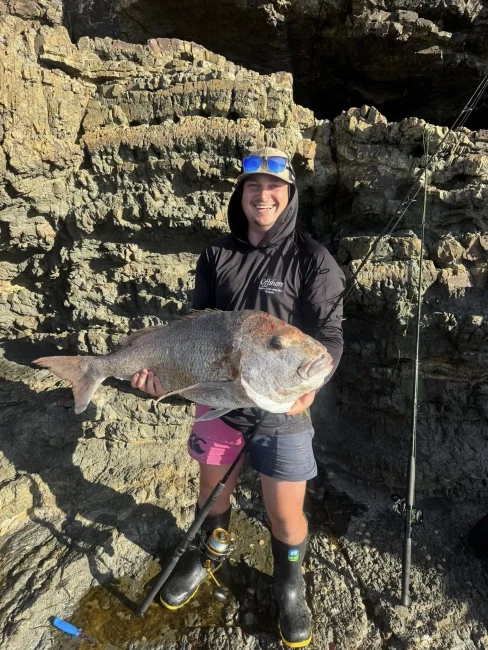
If rock fishing is more your thing, Tapeka Point near Russell is a renowned rock fishing location where record-size snapper and other species have been caught from the rocks. Rock fishing requires careful attention to sea conditions, tides, and your own safety. Always fish with others, wear appropriate footwear, and be aware of waves and changing tides.
Kayak Fishing
Rawhiti, Russell, and Opua are all fantastic kayak fishing spots, as well as a number of areas down the southern shore of the Kerikeri Inlet. Kayak fishing allows you to access spots that are difficult to reach by larger boats while enjoying the peace of being on the water under your own power.
Why the Fishing is So Good Here
The Bay of Islands sits in a zone where warm tropical currents collide with temperate waters. That makes for exceptional marine biodiversity. Tropical species that have drifted south swim alongside New Zealand natives like snapper, trevally, and kahawai. It’s not unusual to see parrotfish and other tropical fish that should be much further north mingling with the locals.
Below the surface, the volcanic underwater terrain creates caves and caverns draped in kelp forests growing up to 1.5 metres high. Large moray eels hide in rocky crevices while schools of kahawai and trevally patrol the open water. Stingrays here can weigh over 300kg and measure up to 3 metres across.
This environment is what makes fishing so plentiful. The sheltered bays and islands create perfect spawning and feeding grounds, while the mix of warm and cool water keeps baitfish abundant throughout the year.
Fish Species You Can Catch
Snapper
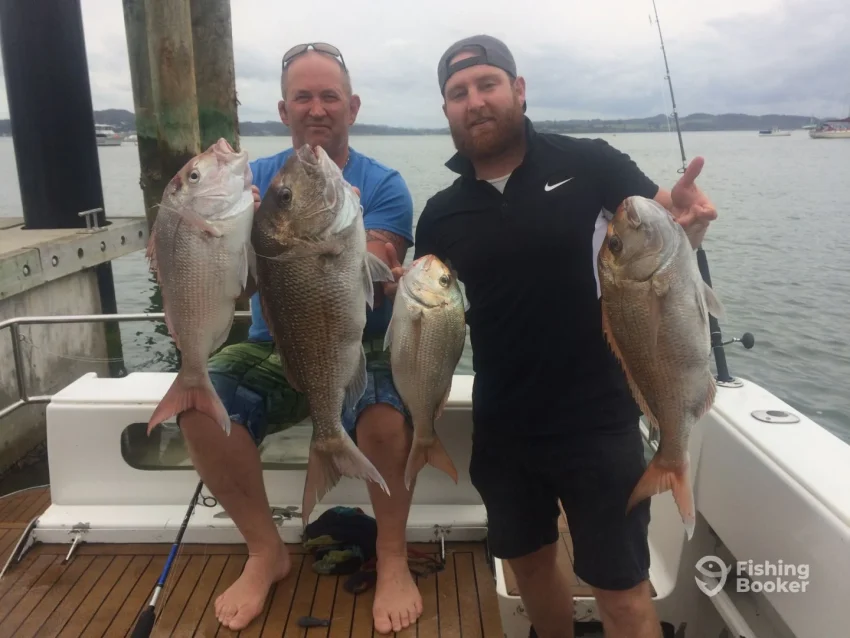
Snapper are the Bay’s most famous fishery, and for good reason. The combination of ideal habitat, abundant food, and healthy breeding populations means you’re fishing in some of the best snapper grounds anywhere.
The Bay of Islands’ most snapper-rich regions are between Red Head and the Ninepin, and from Roberton Island to Capstan Rock. The Brampton Reef, Black Rocks, Albert Channel, and Cape Brett are also certainly worthy of a trip.
Snapper are found in our waters throughout the year, peaking between November and May. Schools begin to spawn in late spring and early summer, so numbers are in high abundance during these months. Many charters operate Catch & Release on some of the bigger fish at this time of year. During autumn, snapper can sometimes be found in shallow estuaries and from time to time even lurking in the mangroves.
The most effective technique is laying a berley trail with live, bleeding fresh bait, before stray-lining with whole mackerel or pilchard squid baits. If you’re new to fishing, your charter skipper can give you the low-down on all the jargon, or you can simply let them take care of the finer details while you relax and fish as nature intended.
Kingfish (Yellowtail Kingfish)

Kingfishing in the Bay of Islands is not for the faint of heart. New Zealand’s waters are home to some of the largest Yellowtail Kingfish in the world, and our stretch of coastline is a magnet for large schools of these powerful predators. When you hook into a big kingfish, you’ll know about it. The runs are blistering, the fight is relentless, and landing one is an achievement any angler can be proud of.
Cape Brett and Hanson’s Reef are the most notable kingfishing spots in these parts, while Kingfish Reef, Bird and Onslow Rocks, and Whale Rock to Red Head are all great locations too.
A number of charter boats in the Bay of Islands specialise in targeting this species, predominantly using mechanical jigging, live baiting, and salt fly. These fish are found in our waters throughout the year, but they tend to peak in autumn and early winter, which is a superb time to visit the Winterless North.
Other Light Tackle Species
Most light tackle species can be caught throughout the year, but different fish are more abundant in different months. Hapuku and tarakihi are best targeted between June and October, while late summer to autumn are the hottest months for kahawai and tuna.
Kahawai are abundant from late summer through autumn. These fast-swimming, silver schooling fish fight hard and jump spectacularly, making them entertaining catches, particularly for families.
Trevally are found throughout the year and fight hard for their size. They’re often caught while targeting snapper or other species.
Tarakihi fishing is best between June and October. These fish are prized for their excellent eating quality and provide consistent action during the cooler months.
Hapuku (also called groper) are targeted from June through October in deeper waters. These powerful bottom-dwellers are among New Zealand’s finest eating fish.
John Dory are occasionally encountered at any time of year. Their distinctive appearance and delicate white flesh make them a prized catch.
Red Gurnard are common throughout the Bay. While not the most glamorous species, they’re excellent eating and often caught in good numbers.
Seasonal Fishing Calendar
The Bay of Islands offers fishing opportunities throughout the year, but understanding seasonal patterns helps you plan your visit around your target species.
Summer (December to February): Peak snapper season continues with fish in high abundance. Kahawai schools are active, particularly in late summer. Water temperatures are warmest. This is peak tourist season, so book charters well in advance.
Autumn (March to May): Excellent fishing across most species. Snapper remain abundant, with some moving into shallow estuaries. Kingfish fishing peaks as the weather cools. Kahawai are at their most active. This is arguably the best overall fishing period.
Winter (June to August): Despite cooler temperatures, the Winterless North lives up to its name. Kingfish continue their peak period. Hapuku and tarakihi fishing is at its best in deeper, cooler waters. Snapper fishing remains productive. Fewer tourists mean more availability with charter operators.
Spring (September to November): Waters begin warming and fish activity increases. Snapper move back toward shallower waters and reefs. Late spring sees snapper beginning their spawning aggregations. This transitional period offers good fishing with improving weather.
Fishing Regulations and Sustainability
The Ministry for Primary Industries (MPI) sets regulations governing recreational fishing throughout New Zealand. Understanding these rules is every angler’s responsibility.
Bag Limits restrict how many fish of each species you can take in a day. For snapper, the daily limit is 10 per person in the Bay of Islands. Kahawai limits are 20 per person. Other species have their own limits, and these can change, so always check current regulations.
Size Restrictions ensure fish have a chance to breed before being harvested. Snapper must be at least 30cm from the tip of the snout to the fork of the tail. Each species has specific requirements that you must follow.
Protected Species cannot be taken under any circumstances. Blue cod, for example, are protected in the Bay of Islands. Various species have total bans or seasonal closures.
Penalties for violations can be severe, including substantial fines and confiscation of catch and equipment. Your charter operator will ensure you’re only keeping legal fish.
Marine Reserves and No-Take Zones
Several marine reserves in the Bay of Islands are completely off-limits to fishing. These protected areas exist to conserve marine ecosystems, provide breeding grounds for fish, and allow scientists to study underwater environments free from fishing pressure.
The most significant is Deep Water Cove Marine Reserve, which encompasses the waters around Maunganui Bay near Cape Brett. This reserve has been protected since 2010, and the results are dramatic. Fish populations inside the reserve are abundant, diverse, and unafraid.
While you cannot fish inside marine reserves, these protected areas benefit the surrounding fishery significantly. Healthy breeding populations inside reserves produce offspring that drift and swim into adjacent waters. Larger, older fish produce exponentially more eggs than younger fish, meaning protected areas act as factories producing the next generation.
The “spillover effect” means anglers working the edges of marine reserves often experience better catches than those fishing distant locations. By protecting key breeding and nursery grounds, marine reserves ensure the long-term sustainability of the fishery everyone enjoys.
Boundaries of marine reserves are clearly marked with buoys and signs. GPS coordinates are available on the Department of Conservation website. Fishing within these zones, even accidentally, carries significant penalties.
Sustainable Fishing Practices
Beyond legal requirements, practising sustainable fishing ensures the Bay of Islands remains a premier destination. Catch & Release is encouraged for large breeding fish, particularly during spawning seasons. These fish are the most productive breeders, and releasing them ensures strong genetics continue in the population.
When practising Catch & Release, handle fish carefully with wet hands or a wet towel to protect their slime coating. Remove hooks quickly and gently. Keep the fish in the water as much as possible. If a fish is deeply hooked or bleeding, it’s often better to keep it rather than release it in poor condition.
Take only what you can use. There’s no virtue in catching your bag limit if you can’t eat or share the fish. Keeping too many fish leads to waste, and wasted fish is a tragedy for both the resource and the angler.
For current regulations, including any recent changes, visit the Ministry for Primary Industries website at www.mpi.govt.nz or the Fisheries New Zealand page. Charter operators stay current on all regulations and will ensure your fishing remains legal and sustainable.
Tips for Successful Fishing
Success in fishing comes from knowledge, preparation, and sometimes just being in the right place at the right time. While your charter skipper brings the knowledge, there are things you can do to improve your experience.
Weather and Conditions: The best fishing often happens when conditions are stable. Several days of settled weather allow fish to establish feeding patterns. Overcast days often fish better than bright, sunny ones.
Tide Considerations: The period around tide changes, when water begins moving after slack tide, often sees increased fish activity. High tide brings fish into shallower areas, while low tide concentrates them in deeper channels.
What to Bring: Sunscreen is essential, as reflection off the water intensifies UV exposure. A hat with a brim protects your face and neck. Polarised sunglasses reduce glare and let you see into the water. Warm layers are important even in summer, as mornings can be cool and wind on the water is always chillier than on land.
Seasickness Prevention: If you’re prone to seasickness, take preventative medication before leaving the wharf. Once you’re feeling unwell, it’s much harder to recover. Staying on deck with fresh air and watching the horizon helps, while going below deck or focusing on close objects makes it worse.
Photography: Capture your catches with good photos, but do it quickly if you’re releasing the fish. Hold fish firmly but gently, supporting their weight. Wet your hands before handling fish to protect their protective slime coating.
Beyond Fishing: The Complete Experience
While catching fish is the primary goal, a day fishing in the Bay of Islands offers much more than what ends up on your line. The journey through 144 islands reveals spectacular scenery that changes with light and tide. Rugged coastlines, secluded beaches, and dramatic rock formations create a constantly evolving landscape.
Dolphins regularly approach boats, sometimes bow-riding alongside as you travel between spots. Seals sun themselves on rocky outcrops and occasionally swim past while you’re fishing. Seabirds, from tiny storm petrels to massive albatross, follow boats and wheel overhead. In summer, you might see orca or pilot whales passing through the Bay.
Many charter operators include time to explore islands, anchor in secluded bays, or visit famous landmarks like the Hole in the Rock at Cape Brett. These breaks from fishing add variety to your day and let you experience the Bay’s beauty from different perspectives.
The day (or hopefully days, weeks, or even years) you spend fishing off our rugged, breathtaking coastline here in the Bay of Islands will be among the most enjoyable of your life.
Plan Your Fishing Trip
Getting There
The Bay of Islands is easily accessible from New Zealand’s major centres.
From Auckland Airport (Main International Gateway):
- Drive: 3.5 hours north via State Highway 1
- Bus: Several daily coach services (InterCity, ManaBus)
- Flight: Regional flights to Kerikeri Airport (35 minutes) then 20-minute drive to Paihia
From Whangārei:
- Drive: 1 hour north via State Highway 1
- Bus: Multiple daily services
Most fishing charters depart from Paihia, Russell, or Opua. For detailed directions and accommodation options, visit our comprehensive directions page.
Booking Your Charter
When to Book: Summer (December to February) is peak tourist season. Book well in advance if travelling during these months. Autumn (March to May) and spring (September to November) offer excellent fishing with better availability. Winter (June to August) has the most availability.
What to Ask: Confirm what’s included (gear, bait, cleaning services, food). Clarify the target species and fishing techniques. Understand cancellation policies, particularly weather-related cancellations.
Weather Flexibility: Weather on the ocean can change quickly. Reputable operators will cancel trips if conditions are unsafe. Build flexibility into your itinerary with buffer days if possible. Travel insurance is recommended for overseas visitors.
For detailed advice on how long to stay and what else to see and do in the Bay of Islands, check out our comprehensive planning your visit guide.
Ready to Cast Your Line?
The Bay of Islands offers world-class light tackle fishing in one of New Zealand’s most beautiful settings. From trophy snapper and powerful kingfish to the simple pleasure of a family day on the water, these sheltered bays and abundant fisheries deliver experiences that stay with you.
Start planning your Bay of Islands fishing adventure today. The snapper are biting, the kingfish are running, and the islands are waiting.

Leave a Reply
You must be logged in to post a comment.