
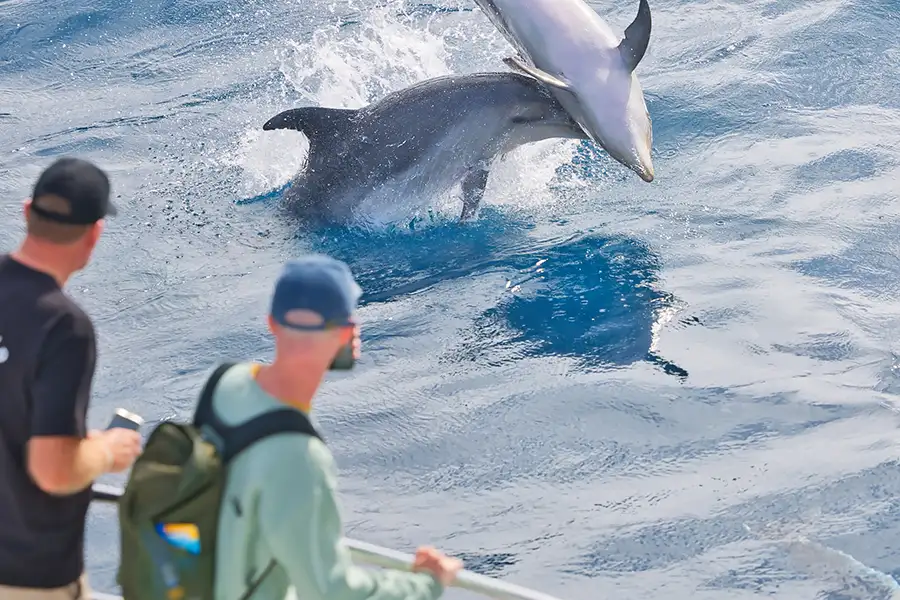

A dorsal fin cutting through the water. A black and white shape gliding past your boat. The distinctive sound of a powerful breath breaking the surface. Orca sightings in the Bay of Islands stop everyone in their tracks.
These visits aren’t predictable the way resident dolphin sightings are. Orca appear when they appear, often staying for hours or days before moving on. When they do show up, it’s one of the most memorable wildlife encounters you can have in New Zealand.
The Bay of Islands sits within the range of New Zealand orca, which means these waters are part of their natural territory. They come to hunt, to travel, to socialise. Sometimes they investigate boats out of curiosity. Other times they’re focused on hunting stingrays and largely ignore vessels.
As part of the Marine Mammal Sanctuary, declared in December 2021, the bay has strict regulations about how boats and people interact with orca. Licensed operators know these rules and understand orca behaviour well enough to position you for encounters that respect the animals and the conservation guidelines protecting them.
If you’re on the water when orca appear, you’re watching apex predators in their natural habitat.
Understanding Bay of Islands Orca
New Zealand Orca Population
New Zealand’s orca aren’t the same population you’ll find in other parts of the world. Research suggests there are several distinct groups of orca around New Zealand, with the animals visiting the Bay of Islands likely belonging to what researchers call the “New Zealand” ecotype. These orca are genetically distinct from Antarctic and offshore populations, have different hunting strategies, and show unique behavioural patterns.
The total number of orca in New Zealand waters is uncertain, though research programmes have photo-identified several hundred individuals over the years. Unlike resident dolphin populations, orca don’t stay in one place. They’re highly mobile, travelling vast distances along New Zealand’s coastline and occasionally venturing into deeper offshore waters.
Physical Characteristics
Orca are the largest members of the dolphin family. Males reach 8-9 metres in length and can weigh up to 6,000kg, whilst females are smaller at 6-7 metres and around 4,000kg. That size difference is immediately obvious when you see a pod together.
You can’t mistake an orca for anything else. The stark black and white colouration is distinctive: black backs and sides, white undersides, and white patches behind each eye and on the sides. Each orca has a unique pattern of white markings and a differently shaped dorsal fin, which allows researchers to identify individuals through photography.
Male orca have dramatically tall dorsal fins that can reach up to 1.8 metres high and stand straight up. Female dorsal fins are shorter, more curved, and typically reach about 90cm. The dorsal fin is one of the easiest ways to determine sex when watching orca in the wild.
Pod Structure and Social Behaviour
Orca live in matrilineal family groups led by older females, with adult sons often staying with their mothers for life. These family pods can include multiple generations: grandmothers, mothers, daughters, sons, and calves.
When you see orca in the Bay of Islands, you’re usually seeing a family. They travel together, hunt together, and communicate constantly through clicks, whistles, and body language. Each family group has its own dialect, unique calls that help them coordinate and maintain bonds.
Orca are intelligent and curious. They’ve been observed investigating boats, seemingly as interested in watching humans as humans are in watching them. This curiosity doesn’t mean they’re tame or friendly. These are wild predators. The curiosity is on their terms, and they’ll engage or ignore you entirely based on what they’re doing and what interests them.
When and Where to See Orca
Seasonal Patterns
Orca can appear in Bay of Islands waters any time of year, but there are definite patterns to when sightings are most likely. The summer months from October through March are particularly good for orca sightings in the Bay of Islands. During these warmer months, orca visits become more frequent, with sightings regular enough that passengers on licensed wildlife cruises have realistic chances of encounters.
Winter months (May through July) also see orca in the bay, though research suggests the summer period offers more consistent sightings. Some years might have regular summer visits, others might go months without confirmed sightings. This variability makes orca viewing fundamentally different from watching resident dolphins, which you can expect to see year-round.
The seasonal pattern likely relates to prey availability, particularly stingrays which orca are known to hunt in the bay’s shallow waters. Water temperature, breeding cycles of prey species, and the movements of other orca pods around New Zealand probably all influence when these animals choose to spend time in Bay of Islands waters.
Best Locations for Sightings
Orca don’t stick to predictable spots the way fur seals do. They’re mobile hunters that cover huge areas, which means they could appear anywhere in the bay. That said, certain locations tend to produce more sightings than others.
The channels between islands see regular orca activity. The combination of tidal flow, varied depth, and concentrated fish populations makes these channels productive hunting grounds. Orca often travel along these corridors, sometimes pausing to hunt, other times passing through on their way elsewhere.
The entrance to the bay, where deeper offshore waters meet the more sheltered inner harbours, is another productive area. Orca often appear here first before moving deeper into the bay, and it’s a common location for watching them hunt stingrays in the sandy shallows.
The outer islands and the waters around the famous Hole in the Rock also produce sightings, though these locations tend to see more transient pods passing through rather than hunting and staying.
Shore-based sighting opportunities are limited compared to being on the water. Orca can come quite close to shore, but the chances of happening to be in the right place when they do are slim. Most reliable sightings happen from licensed tour vessels that cover more water and can respond when orca are spotted in the area.
What Orca Do in the Bay
Hunting Behaviour
Watching orca hunt is spectacular. In the Bay of Islands, their primary prey appears to be stingrays, though they’ll take fish and other marine life when opportunities arise.
Stingray hunting in shallow water is dramatic. Orca swim into surprisingly shallow areas, sometimes with their backs exposed above the surface, searching the sandy bottom for buried rays. When they locate prey, they use their bodies to stun or disorient the ray before eating it. This hunting technique is learned behaviour passed down through family groups, particularly common in New Zealand orca.
Family members often hunt cooperatively, coordinating movements and using combined intelligence to corner or tire prey. Not all hunting is frantic action. Sometimes orca spend hours slowly patrolling, clearly searching but not actively chasing. Other times they suddenly burst into activity when they’ve located something worth pursuing.
Travelling and Resting
Orca don’t hunt constantly. They also travel between locations, rest, and socialise. When travelling, they typically move in a steady, purposeful manner with regular surfacing intervals. You’ll see the distinctive dorsal fins breaking the surface in sequence as the pod moves together.
Resting looks different. Orca will slow down, sometimes forming tight groups, and surface more slowly and deliberately. They may log at the surface, barely moving, conserving energy between active periods. This resting behaviour often happens after intense hunting or during the middle of the day.
Social Interactions
Orca are playful and physical with each other. You might see them breaching (leaping out of the water), spy-hopping (raising their heads vertically above the surface to look around), or slapping their tails and pectoral fins on the water. These behaviours serve various purposes: communication, play, showing off, or possibly just because they can.
Vocal communication is constant, though you’ll only hear it if you have a hydrophone. Orca talk to each other continuously, using their family-specific calls to maintain contact and coordinate activities. This acoustic communication is as important to orca as visual cues.
Responsible Orca Viewing
Marine Mammal Sanctuary Regulations
The Bay of Islands became a Marine Mammal Sanctuary in December 2021, with strict regulations about how people interact with marine mammals, including orca. These rules are based on research about what these animals need and what human behaviour causes stress or disruption.
The sanctuary regulations require all vessels and people in the water to stay at least 300 metres from any marine mammal. If your vessel finds itself within 300 metres of orca (perhaps they approached you), you must stop and remain stopped until the marine mammals move more than 300 metres away.
The sanctuary has designated safe zones where all vessels must travel at five knots or slower, regardless of whether marine mammals are visible. These zones provide quiet areas where animals can rest, feed, and nurse without disturbance.
If orca are feeding, resting, or showing signs of distress, vessels must keep even greater distances. If there are calves present, extra caution applies. The regulations specifically prohibit deliberate approaches to mothers with young calves.
Swimming with orca is illegal in the Bay of Islands Marine Mammal Sanctuary. You stay in your vessel, and the orca decide whether to approach you.
What Licensed Operators Do
Licensed commercial operators in the Bay of Islands understand orca behaviour and know how to position vessels to give passengers good viewing whilst respecting the animals. They don’t chase orca. Instead, they predict where orca might travel based on their direction and behaviour, position the vessel appropriately, and let the orca decide whether to come closer.
Good operators also interpret what you’re seeing. They’ll point out individuals they recognise, explain hunting behaviour as it unfolds, and share information about orca biology and conservation. This education is part of responsible wildlife viewing, helping visitors understand what they’re watching and why the regulations exist.
Operators contribute sighting data to the Department of Conservation and university researchers studying New Zealand orca. Every encounter adds to our understanding of these animals’ movements, behaviour, and population dynamics.
If Orca Approach Your Vessel
Sometimes orca come to you. They might investigate your boat, swim underneath, or surface right alongside. This is on their terms, and the regulations allow it provided you haven’t deliberately approached them.
If orca approach whilst you’re on a licensed tour, the skipper will likely cut the engine to neutral or idle and let the orca do what they’re doing. Maintain quiet voices. Sudden loud noises can startle them. Don’t lean far over the railings or make sudden movements. Don’t put your hands in the water.
Watch and appreciate. These are wild apex predators choosing to spend time near your vessel. It’s a privilege, not a right, and it happens because the orca are curious or because you happen to be in the path they’re already travelling.
The encounter will end when the orca decide it ends. They’ll move on, and the vessel will resume its journey. Trying to follow or relocate them would violate the regulations and risk habituating the orca to boats in ways that could be harmful.
Recognising Individual Orca
Photo Identification
New Zealand researchers have been photo-identifying orca for decades, building catalogues of individuals based on their unique dorsal fin shapes and saddle patch patterns. Several orca that visit the Bay of Islands are known individuals, recognised from their distinctive markings and tracked across multiple years.
If you’re photographing orca from a licensed vessel, consider sharing your photos with research programmes. Clear shots of dorsal fins and saddle patches help researchers track which orca are using the bay, when they visit, who they’re travelling with, and whether individuals are returning year after year.
Some regular Bay of Islands visitors include distinctive individuals like “Miracle” and her offspring, recognisable from published research photos. Spotting a known individual adds another dimension to the encounter, connecting you to the ongoing story of that orca’s life and the research following these animals across New Zealand waters.
What Researchers Learn
Photo identification isn’t just about naming orca. It helps researchers understand population structure, movement patterns, and family relationships. By tracking which individuals appear together, researchers can map family pods and determine which orca are related. By documenting where and when individuals appear, they can understand seasonal movements and identify important habitats.
This research also reveals concerning trends. Some New Zealand orca populations are declining, and understanding why requires knowing which individuals are alive, where they’re going, and whether they’re successfully raising calves. Every sighting documented by tour operators or researchers adds data to these critical conservation questions.
Beyond the Sighting
Conservation Context
Orca face various threats in New Zealand waters. Pollution, particularly toxins that accumulate in apex predators, affects their health. Noise pollution from boats and marine activities can interfere with their acoustic communication and hunting. Ship strikes, whilst rare, are documented. Declining prey populations in some areas may affect feeding success.
The Marine Mammal Sanctuary status provides important protections, but orca don’t stay within sanctuary boundaries. They travel throughout New Zealand’s coastal waters, encountering different regulations and different levels of protection. The sanctuary regulations at least ensure that in the Bay of Islands, these animals are protected from harassment and excessive boat traffic.
What Your Sighting Contributes
Tourism revenue from licensed operators funds ongoing conservation work and provides economic incentive to maintain the Marine Mammal Sanctuary protections. The photos you share help researchers track individuals and movement patterns. The stories you tell raise awareness.
Seeing orca changes how people think about the ocean. These aren’t abstract conservation concepts. They’re living animals with family bonds and intelligence, going about their lives in New Zealand waters. That direct encounter creates understanding that reading about conservation can’t match.
Booking an Orca Viewing Experience
Choosing a Licensed Operator
Fullers Hole in the Rock Dolphin Cruise, Explore Group’s Dolphin Eco Cruise, and Carino Wildlife Cruises Island & Wildlife Day Cruise all include marine mammal viewing with DOC-licensed crews trained to spot and approach orca responsibly. Both operators contribute sighting data to ongoing research and conservation efforts.
Duration ranges from 4.5 to 5.5 hours, with island stops included. Cruises operate daily (weather permitting), with Explore Group running seasonally from late October to late April. Both operators offer free cancellation up to 24 hours before departure.
When booking, good operators will emphasise that orca sightings aren’t guaranteed, explain how they locate marine life, and describe their protocols for responsible viewing.
Managing Expectations
Be realistic about your chances. Even during peak orca season, sightings aren’t guaranteed. You’re more likely to see resident dolphins, possibly whales, and definitely beautiful scenery. If orca appear, it’s a bonus, not a certainty.
Some visitors book multiple trips to increase their chances. If seeing orca is important to you, plan for several days in the Bay of Islands and book multiple wildlife cruises. Statistically, more time on the water during peak season improves your odds.
Ask operators about their sighting rates. Reputable operators will give you honest numbers: maybe they see orca once or twice a week during peak season, or a few times a month. These honest assessments help you make informed booking decisions.
When to Visit
For maximum chances of orca sightings, visit between October and March, when summer conditions bring more frequent orca visits to the bay. Book accommodation and tours in advance during these months, particularly during school holidays when domestic tourism increases.
Weather matters. Calm conditions make spotting orca easier since there’s less surface disturbance. Rough weather doesn’t prevent orca from being present, but it makes them much harder to see. Check weather forecasts and be prepared to be flexible with your booking if conditions look poor.
Early morning trips often have better visibility and calmer conditions. The low angle of morning light also makes spotting dorsal fins easier. That said, orca can appear at any time of day, and afternoon trips are equally valid.
Other Marine Life You’ll See
Dolphins
Whilst looking for orca, you’ll almost certainly encounter the bay’s resident bottlenose and common dolphins. These smaller cetaceans are present year-round and provide excellent wildlife viewing even when orca don’t appear. The dolphins often bow-ride in front of vessels, breach, and display acrobatic behaviour.
Learn more about Dolphin Watching in the Bay of Islands.
Seals and Penguins
Fur seal colonies are visible from wildlife cruise routes, particularly around outer islands and rocky outcrops. You might also spot little blue penguins, the world’s smallest penguin species, which nest along the coast and return to shore each evening.
Seabirds
The bay hosts numerous seabird species. Gannets dive spectacularly for fish. Various shearwater species glide low over the water. Terns, gulls, and other coastal birds are constantly visible. These birds often signal fish activity, which can attract larger marine predators including orca.
Fish and Rays
The clear waters sometimes reveal schools of fish, cruising stingrays, and occasionally large kingfish. These prey species are what attract the larger marine mammals to the bay and are worth watching in their own right.
Practical Information
What to Bring
Orca watching cruises have specific requirements beyond general Bay of Islands packing. Even in summer, bring a warm, windproof jacket. It’s significantly cooler on the water with wind and spray, and temperatures drop quickly when the boat is moving.
A camera with good zoom is essential for photographing orca from the required 300-metre distance (phone cameras often don’t zoom enough for good shots). Binoculars help you spot distant dorsal fins and observe behaviour details.
If you’re prone to seasickness, take motion sickness medication 30 minutes before departure. Seas can be choppy even when they look calm from shore. Layered clothing is important because temperature varies significantly between on-deck (cold and windy) and in-cabin (warm).
For complete packing advice including sunscreen, hats, and general Bay of Islands essentials, see our Planning Your Visit guide.
Photography Tips
Photographing orca from a moving boat is challenging. Use a fast shutter speed (1/1000 second or faster) to freeze motion. Shoot in burst mode to capture behaviour as it happens. Focus on the dorsal fins as they break the surface, since that’s your most predictable photographic opportunity.
A zoom lens (200-300mm or longer) helps photograph orca at the regulation 300-metre distance. If you don’t have a zoom lens, focus on capturing the experience and the context rather than close-up shots.
Don’t spend the entire encounter behind your camera. Put it down regularly and actually watch what’s happening. The memory of looking into an orca’s eye or watching a family pod travel together is worth more than another slightly blurry photo.
What Happens After You See Orca
Most tour operators will ask passengers to share their photos and observations. Some have formal partnerships with research programmes. Others collect data informally. Either way, contributing your sightings helps build the collective knowledge about orca visiting the Bay of Islands.
Consider sharing your experience responsibly on social media. Avoid revealing specific locations in ways that might encourage unsafe independent attempts to find orca. Instead, share the experience, the licensed operator you used, and the importance of responsible wildlife viewing.
Planning Your Orca Viewing Experience
Seeing orca in the Bay of Islands isn’t guaranteed, but it’s possible. They visit these waters, particularly during summer (October to March). When they appear, it’s one of New Zealand’s best wildlife encounters.
The key is managing expectations, choosing licensed operators who prioritise conservation, and being on the water during peak season. Even if orca don’t appear, you’ll see resident dolphins, possibly whales, seals, and seabirds whilst exploring one of New Zealand’s most beautiful coastal areas.
If orca do show up, you’ll see wild animals on their terms, choosing whether to investigate your vessel or ignore it entirely. That encounter, however brief, connects you to ongoing orca research and conservation efforts in New Zealand waters.

Leave a Reply
You must be logged in to post a comment.