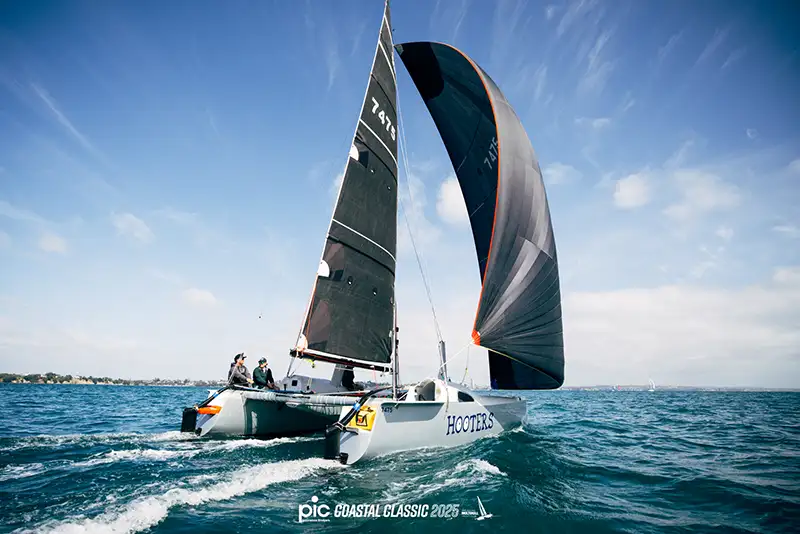
Each Labour Weekend, the waters between Auckland and the Bay of Islands come alive as over 100 yachts set off on New Zealand’s premier coastal yacht race. The Coastal Classic is a 119 nautical mile drag race from Devonport Wharf in Auckland to Russell Wharf, combining raw speed with tactical sailing across one of the country’s most stunning stretches of coastline. Since its inception in 1982, this iconic event has grown from a handful of boats racing north to become one of the world’s most significant coastal yacht races, attracting everything from grand prix racing machines to family cruisers, with competitors willing to sail across oceans just to take part.
The Event at a Glance
The Coastal Classic starts on the Friday morning of Labour Weekend, with three staggered start sequences beginning at 9:30am off Devonport Wharf. Different divisions start at 15-minute intervals based on boat type and performance, ensuring the diverse fleet has fair racing conditions. The course is deceptively simple: leave Devonport, head north, keep both Little Barrier Island and the Poor Knights Islands to starboard, thread through Cape Brett, and finish at Russell Wharf in the Bay of Islands.
Competitors have until 3pm on Saturday to complete the course, giving slower boats and those facing challenging conditions time to reach Russell. The fastest boats, typically high-performance multihulls or racing monohulls, can complete the journey in under six hours in favourable conditions, arriving in Russell by late afternoon or early evening. Mid-fleet boats usually finish through the night, while smaller cruising yachts and those encountering light winds may take well into Saturday to complete the course.
The race is organized by the New Zealand Multihull Yacht Club, though entries are open to both monohulls and multihulls across multiple divisions. Alongside the competitive fleet, a non-competitive cruising rally division accommodates boats whose crews want the experience of sailing to Russell as part of the event without the pressure of racing. This inclusive approach has helped the Coastal Classic maintain its character as both a serious yacht race and a celebration of sailing that welcomes diverse participation.
A Race Shaped by Weather and Tactics
The 119 nautical mile course up the North Island’s east coast exposes competitors to the full range of conditions this stretch of water can deliver. Weather patterns vary dramatically from year to year, with some editions featuring consistent winds that turn the race into a pure speed contest, while others present tactical challenges with light winds, wind shifts, or the dreaded calms that can leave entire fleets drifting.
Easterly winds generally favour the multihull fleet, allowing these fast boats to reach optimal speeds and potentially set record times. Westerly or south-westerly conditions create different challenges, often favouring monohulls better suited to upwind sailing. The tidal flows through the Hauraki Gulf and around coastal features add another layer of complexity, with experienced navigators using current knowledge to gain advantages over competitors who simply point toward Russell and hope for the best.
Cape Brett, marking the entrance to the Bay of Islands, represents a psychological and tactical milestone. Boats that have maintained good speed up the coast can suddenly find themselves becalmed in the lee of the cape, watching as competitors on different tracks slide past. The final approach to Russell through the Bay of Islands can be equally treacherous, with wind shadows from the islands and dying breezes testing crews’ patience after hours of hard sailing.
The simple course with few marks to round means overtaking opportunities are limited. Success depends heavily on a clean start, smart routing decisions, and maintaining boat speed throughout. Unlike inshore racing where tactical positioning can overcome speed differences, the Coastal Classic rewards preparedness, good weather routing, and the ability to keep a boat moving efficiently for hours on end.
A Diverse and Growing Fleet
The Coastal Classic fleet encompasses extraordinary variety. Grand prix racing yachts with professional crews chase line honours and course records, their carbon fibre hulls and massive sail plans designed for precisely this type of racing. High-performance multihulls regularly post the fastest times, with boats like the foiling trimarans capable of averaging speeds that monohulls can barely reach in bursts.
Mid-fleet comprises a mix of serious racing boats, well-equipped cruiser-racers, and family boats whose crews approach the race as an adventure rather than competition. Some of these boats compete year after year, their crews returning annually to measure themselves against the course and each other. Others are first-timers discovering whether coastal racing appeals or if they prefer more leisurely sailing.
The smallest boat in recent years has been an Elliott 7, a sport boat small enough to be trailered home rather than sailing back to Auckland. At the other end of the spectrum, boats over 60 feet long compete, some having sailed across the Tasman Sea specifically to participate. International entries, including Australian boats completing the Sydney to Auckland Ocean Race then staying for the Coastal Classic, add global flavour to what remains a distinctly Kiwi event.
Legendary yachts make regular appearances. Steinlager II, which won the Whitbread Round the World Race, competes as a guest boat offering crew positions to those wanting to experience the race aboard a piece of sailing history. Classic boats from the race’s early years sometimes return, their presence connecting current competitors to the event’s origins.
More Than Just a Race
The Coastal Classic has become Labour Weekend tradition for many families and crews. Planning begins months in advance, with boat preparation, crew selection, and entry submissions occupying winter months. The race signals the start of New Zealand’s summer sailing season, with crews using it as both competition and excuse to position their boats in the Bay of Islands for cruising after the event.
Russell transforms for the weekend, with the small historic town hosting hundreds of competitors and supporters. The atmosphere along Russell Wharf builds through Friday afternoon and evening as boats finish, with crews celebrating arrivals, commiserating over equipment failures, and exchanging stories about conditions encountered. Local businesses embrace the influx, with restaurants and bars busy throughout the weekend.
Prize-giving and social events bring competitors together after the race, with line honours and handicap winners recognized alongside division winners. The event maintains informal, welcoming character despite its competitive nature, with experienced offshore racers happily sharing advice with crews completing their first Coastal Classic.
The race also serves as testing ground for boats, equipment, and crew combinations planning more ambitious offshore races. Many sailors cut their teeth on the Coastal Classic before attempting longer ocean races, using the event to develop skills in navigation, weather routing, watch systems, and the endurance required for extended racing.
A Storied History
The inaugural Coastal Classic in 1982 established the race’s DNA—fast, direct, and dramatic. Through the 1980s and 1990s, fleets grew to over 200 yachts as revolutionary designs rewrote expectations of coastal speed. Sir Peter Blake raced aboard Krisis in 1987, while future America’s Cup sailors tested themselves off Cape Brett.
Records have been the heartbeat of the event, with each generation pushing speeds higher. The current monohull and multihull records represent extraordinary achievements in favourable conditions, but the race’s history includes countless memorable editions where conditions made just finishing an accomplishment. Some years have seen dramatic rescues, equipment failures forcing retirements, and navigational errors teaching expensive lessons.
The event’s survival and growth over four decades reflects New Zealand’s sailing culture and the Coastal Classic’s success in welcoming diverse participants. Professional crews on campaign boats race alongside weekend sailors fulfilling long-held ambitions, creating the inclusive atmosphere that defines the event.
Experience the Race
For spectators, the start off Devonport provides spectacular viewing, with over 100 boats jockeying for position before the start sequence. The sight of the fleet departing Auckland Harbour, sails filled and crews focused, captures the scale and drama of coastal racing. In Russell, watching boats arrive through Friday night and Saturday provides its own entertainment, with each arrival bringing relief, celebration, or frustration depending on how the race unfolded.
Family and friends can follow the race online through live tracking, watching boats progress up the coast and comparing speeds between different entries. The finish at Russell Wharf is accessible to spectators, with the waterfront providing front-row seats to arrivals and the immediate reactions of crews completing the journey.
For sailors considering entering, the Coastal Classic represents achievable challenge for boats of varying types and sizes. The race organization provides detailed documentation on requirements, divisions, and safety regulations. Crew positions are often available for those without their own boats, with experienced skippers welcoming competent sailors to complete their teams.
Plan Your Visit
If you’re in the Bay of Islands over Labour Weekend, the Coastal Classic adds dimension to the holiday period. Russell experiences the most direct impact, with boats arriving throughout Friday night and Saturday. The atmosphere around the waterfront during this period captures New Zealand sailing culture at its most vibrant.
For those considering participating, entries typically open months in advance with early registration discounts. The race requires appropriate safety equipment and qualified crew, with detailed requirements available through the race website. Preparing a boat for the Coastal Classic becomes significant undertaking, but the payoff comes in the experience of racing up one of New Zealand’s most beautiful coastlines as part of an iconic event.
For full event details, race requirements, entry information, live tracking, and updates on the coming year’s race, visit the Coastal Classic website.
Map
Sorry, no records were found. Please adjust your search criteria and try again.
Sorry, unable to load the Maps API.