
The Bay of Islands sits at a sweet spot where warm water from the north meets Northland’s coast. That makes for interesting diving, with tropical and subtropical fish appearing alongside the usual suspects. Visibility is generally good, and the sheltered bays mean you can get out on the water most days of the year.
The diversity is what makes diving here special. You can explore world-famous shipwrecks with fascinating histories, dive marine reserves teeming with fish, or navigate through dramatic underwater caves and kelp forests. Sheltered waters, volcanic terrain, and clear visibility make it ideal for divers of all experience levels.
Most dive trips start from Paihia, Russell, and Kerikeri. From these bases, you’re just a short boat ride from more than 144 islands and dozens of dive sites. Whether you want to explore historic wrecks, photograph coral gardens, or swim through underwater canyons, the Bay of Islands has something for you.

Top Dive Sites in the Bay of Islands

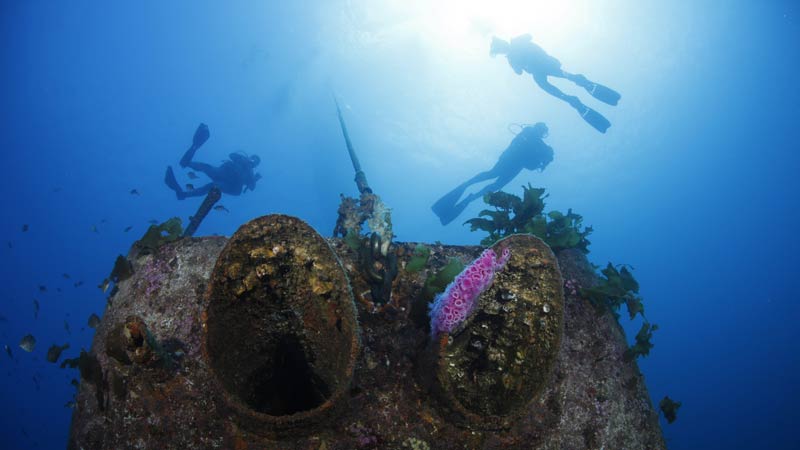
Photo taken by Paihia Dive
HMNZS Canterbury Wreck
Location and Access
The HMNZS Canterbury rests upright and fully intact in Deep Water Cove near Cape Brett, approximately 30-40 minutes by boat from Paihia. The site’s sheltered position within the marine reserve provides protection in most weather conditions, making it accessible more frequently than many wreck sites.
Depth and Difficulty
This impressive 113m (371 feet) naval frigate has diving opportunities for multiple certification levels:
- Shallowest point: 12-14m (39-46 feet) at the middle funnel
- Upper decks and bridge: 22-27m (72-89 feet)
- Stern section: 36-38m (118-125 feet)
Open Water divers can explore the wreck as part of a Deep Adventure Dive (contributing to Advanced Open Water certification), while those with wreck diving specialities can safely navigate the interior through purpose-cut access points.
What to Expect
Deliberately prepared with divers in mind, the Canterbury has numerous entry and exit points for safe penetration dives. Divers can explore the bridge, helicopter hangar, gun mounts, and missile rooms. The wreck is rapidly becoming colonised by soft corals, kelp, jewel anemones, and an abundance of marine life including resident schools of fish, crayfish, and moray eels. Visibility ranges from 8 to 30m (26-98 feet) depending on conditions.
Why It’s Famous
The Canterbury represents one of New Zealand’s premier wreck dives. Commissioned in 1971 and serving the Royal New Zealand Navy until 2005, she was deliberately sunk in November 2007 to create an artificial reef. Her impressive size, intact condition, and location within a marine reserve make her a bucket-list dive for wreck enthusiasts nationwide.
Rainbow Warrior Wreck
Historical Background


The Rainbow Warrior holds a unique place in New Zealand’s history and the hearts of environmentalists worldwide. Built in 1955 as a fishing trawler, she was acquired by Greenpeace in 1977 and converted into their flagship vessel. On 10 July 1985, French secret service agents bombed the Rainbow Warrior in Auckland Harbour as she prepared to protest French nuclear testing in the Pacific. The attack killed photographer Fernando Pereira and became known as the “Rainbow Warrior Affair” or Opération Satanique.
After being deemed irreparable, Greenpeace gifted the vessel to the sea. In 1987, she was scuttled off the Cavalli Islands near Matauri Bay, where she now serves as both a memorial and a thriving artificial reef.
The Dive Experience
At 40m (131 feet) long and resting at 18-27m (59-89 feet) depth, the Rainbow Warrior has transformed into a spectacular underwater ecosystem. The wreck is adorned with vibrant jewel-toned anemones in purple, yellow, and blue, making it a favourite with underwater photographers. Schools of golden snapper, kingfish, and John Dory weave through the structure, while the wreck provides shelter for countless fish species.
Note: The Rainbow Warrior is strictly a non-penetration dive due to the wreck’s condition. Some areas allow viewing of the interior, but careful buoyancy control and gentle finning are essential.
Access and Requirements
Trips to the Rainbow Warrior depart from Matauri Bay, north of Paihia (approximately 45 minutes’ drive). Operators launch inflatable boats directly from the beach, making for just an 8-minute boat ride to the wreck site. Open Water divers must complete the dive as a Deep Adventure Dive. Most operators require divers to have been in the water within the past 1-2 years due to the wreck’s depth and temperate water conditions.
Deep Water Cove (Maunganui Bay)

Deep Water Cove is not just home to the Canterbury wreck; the entire bay is a protected marine reserve that has flourished for over a decade. The reserve status means marine life here is abundant and unafraid, offering exceptional encounters for divers and underwater photographers.
The volcanic terrain has dramatic walls, caves, caverns, and swim-throughs covered in kelp forests that grow to approximately 1.5m (5 feet) high. The reserve is renowned for its colourful soft corals and sponge gardens, large schools of blue maomao and golden snapper, kingfish, John Dory, and other reef species. Crayfish hide among boulders while moray eels sit in crevices. You’ll occasionally spot short-tail stingrays, dolphins, and seals passing through.
The combination of good visibility (consistently 15-20m or 49-66 feet, up to 40m or 131 feet when blue water moves in), vibrant marine life, and dramatic topography makes Deep Water Cove ideal for underwater photography. The protected status ensures fish are abundant and approachable, while the variety of subjects, from macro nudibranchs to wide-angle reef scenes, means there’s always something new to shoot.
Other Notable Sites
Urupukapuka Island
Multiple dive sites around this popular island offer both shallow reef dives and deeper wall dives, with opportunities to explore kelp-covered boulders hiding crayfish and moray eels. The island’s various aspects mean you can usually find a protected site regardless of wind direction.
Cape Brett (Hole in the Rock)
For more experienced divers, the sites around Cape Brett deliver dramatic underwater topography with potential for strong currents but exceptional encounters with larger pelagic species like kingfish and the occasional manta ray.
Bowling Alley
A shallower site at 5-25m (16-82 feet), perfect for Open Water and Advanced divers. The kelp-covered boulders and abundant fish life make this a solid choice for building experience before tackling the deeper wrecks.
Marine Life
What You’ll See
The Bay of Islands’ subtropical location creates a unique marine environment where tropical species mix with temperate water dwellers. Warm currents from the equator bring tropical fish species typically found much further north, while local species thrive in the nutrient-rich waters.
Year-Round Species:
- Short-tail stingrays (up to 350kg and 3m or 10 feet across)
- Blue maomao forming spectacular schools
- Golden snapper and kingfish
- Moray eels
- Numerous nudibranch species
- Seahorses
- Crayfish
Seasonal Visitors:
- Summer (December-March): Manta rays and sea turtles when warm currents are strongest
- Winter (June-August): Increased seal activity around offshore rocks
- Spring/Autumn: Best visibility for photography
Coral and Sponge Gardens
Unlike many temperate dive destinations, the Bay of Islands has spectacular coral and sponge formations. The volcanic substrate provides ideal attachment points for soft corals in multiple colours, jewel anemones (purple, yellow, blue, orange), large sponge formations, and kelp forests creating dramatic vertical elements.
Dive Charters and Operators
The Bay of Islands is serviced by several well-established dive operators, each offering professional service with experienced local knowledge. Most are based in Paihia, with some operating from nearby locations.
Types of Trips Available
Wreck Dives:
Full-day trips typically combine the Canterbury wreck with reef diving, or head north to the Rainbow Warrior and Cavalli Islands reefs. Most wreck trips are two-tank dives with a surface interval in between.
Reef Dives:
You’ll find multiple reef sites scattered across the Bay of Islands, including marine reserve dives in Deep Water Cove and explorations through caves, caverns, and swim-throughs. Many operators also offer shallow snorkelling sites for non-divers who want to tag along.
Training Courses:
Local operators offer PADI Open Water certification, Advanced Open Water and speciality courses, Deep Adventure Dives for wreck access, wreck diving specialities, Discover Scuba Diving experiences, and refresher courses for returning divers.
Snorkel Excursions:
Guided snorkel trips cater to non-divers and families, with shallow reef sites and passenger options for friends or family who just want to come along for the boat ride.
What to Expect on a Typical Dive Trip
Most dive trips from Paihia follow a similar pattern. You’ll meet at the dive shop around 7:45-8:00am for equipment setup and paperwork, then depart from Paihia wharf at 8:30am (or drive to Matauri Bay if you’re heading to the Rainbow Warrior). The boat cruise through the islands takes 30-40 minutes and doubles as wildlife viewing, with safety briefings conducted en route or at the site.
The diving schedule usually includes your first dive (typically the wreck if one’s included), followed by a surface interval with lunch and snorkelling, then a second dive at a reef site. You’ll be back at the wharf by 3:30-4:00pm.
All operators provide full gear hire options, with 7mm wetsuits as standard (5mm or 3mm in summer). You’ll get comprehensive safety briefings, experienced guides who know all the sites, and small group sizes, typically 6-8 divers maximum.
Diving Conditions and Best Time to Visit
Water Temperature
Water temperature in the Bay of Islands follows a predictable seasonal pattern:
- Summer (December-March): 20-22°C (68-72°F) – Most comfortable diving
- Autumn (April-May): 18-20°C (64-68°F) – Pleasant conditions continue
- Winter (June-August): 15-17°C (59-63°F) – Coldest period but excellent visibility
- Spring (September-November): 15-18°C (59-64°F) – Temperatures rising
Wetsuit Recommendations
Most operators provide 7mm wetsuits as standard, along with hoods, boots, and gloves for winter diving. Personal preferences vary, but in summer a 3-5mm wetsuit or shorty is acceptable for hardy divers. In winter, you’ll want a 7mm full wetsuit with hood, gloves, and boots. Many divers prefer 7mm for extended dive days regardless of season.
Visibility
Typical visibility ranges from 15-20m (49-66 feet), providing excellent diving conditions year-round. However, when east winds persist and push open ocean water onto the coast, visibility can extend to an exceptional 40m (131 feet) or more. This “blue water” typically occurs in late summer and creates optimal conditions for photography and long-range viewing.
East winds bring the clearest water, while plankton blooms can reduce visibility (typically in summer). Weather and swell impact shallow sites more than deeper wrecks, and marine reserve areas often maintain better visibility.
Weather Considerations
The Bay of Islands’ sheltered geography provides protection from many weather patterns. The 144 islands create numerous dive sites with different exposures, allowing operators to find suitable conditions on most days.
Best Diving Months:
- December-March: Warmest water, most tropical species, occasional reduced visibility
- June-August: Coldest water but often best visibility, fewer crowds, dramatic winter light
- Year-round: Diving possible throughout the year with appropriate gear
When Marine Life Is Most Active
Late summer and autumn bring peak tropical species activity when warm currents are strongest. Winter sees seals more active around offshore rocks, while spring brings increased fish spawning activity. Resident species are always present in the marine reserve throughout the year.
Training and Certification
Local Dive Schools and PADI Courses
The Bay of Islands hosts several PADI 5-Star dive centres offering comprehensive training from beginner through professional levels. All follow international safety standards while providing personalised instruction in the region’s unique diving environment.
Local operators offer Discover Scuba Diving as a perfect introduction for non-certified divers (pool session followed by shallow reef dive). Full PADI Open Water Diver certification typically takes 3-4 days, while PADI Advanced Open Water includes the Deep Adventure Dive needed for wreck access. Speciality courses cover wreck diving, nitrox, underwater photography, and navigation. For those progressing further, Rescue Diver and Divemaster courses are also available.
Options for All Experience Levels
Beginners
The Bay of Islands provides ideal learning conditions with sheltered bays, good visibility, and shallow reef sites. Many dive operators offer the full Open Water course, combining pool sessions with open water training dives on beautiful reef sites.
Intermediate Divers
Open Water certified divers can explore most reef sites and, with a Deep Adventure Dive, gain access to the famous wrecks. This makes the Bay of Islands perfect for building experience and confidence.
Advanced Divers
Experienced divers can pursue wreck penetration training, deeper profiles on the Canterbury, and challenging sites around Cape Brett with potential currents. Technical diving training is also available for those interested in extended bottom times.
Refresher Courses
Haven’t dived in a while? Most operators offer refresher programmes, either in a pool environment or during shallow reef dives. Given the temperate water and 7mm wetsuit requirements, refreshers are particularly valuable if you’re more familiar with warm water diving.
Refreshers are recommended if you haven’t dived in 12+ months, have never used a 7mm wetsuit before, are coming from exclusively tropical diving backgrounds, or feel nervous about wreck diving or deeper profiles.
Conservation and Marine Reserves
Deep Water Cove Marine Reserve
Established over a decade ago, Deep Water Cove Marine Reserve encompasses the area around the Canterbury wreck and adjacent reef systems. The protected status has allowed marine life to flourish dramatically, creating one of New Zealand’s premier diving locations.
Fish populations have increased significantly in numbers and size, while marine species show little fear of divers, allowing close encounters. Biodiversity has expanded with healthier breeding populations, and kelp and coral growth has accelerated without fishing pressure. The ecosystem provides natural protection for the wreck structures.
Other Protected Areas
While Deep Water Cove is the formal marine reserve, several areas in the Bay of Islands have rāhui (temporary traditional closures) in place, allowing fish stocks to recover and providing similar benefits to those seen in the marine reserve.
Responsible Diving Practices
As visitors to this pristine underwater environment, divers play a crucial role in conservation:
- Maintain buoyancy control to avoid contact with corals, kelp, and the seafloor
- Don’t touch or harass marine life; observe from a respectful distance
- Secure all gear so nothing is dragging that could damage reef structures
- Follow wreck diving protocols by staying within your training limits and avoiding disturbing sediment
- Remove nothing, as everything underwater has ecological value
- Report injured or entangled animals to operators or DOC
- Minimise environmental impact by using reef-safe sunscreen and reducing single-use plastics
How Visitors Can Help Preserve the Environment
- Choose operators with strong environmental commitments and support businesses that prioritise conservation
- Participate in underwater clean-ups when operators organise debris removal dives
- Spread awareness by sharing your experiences and the importance of marine protection
- Respect local guidelines by following all briefings and site-specific rules
- Consider citizen science by reporting fish species sightings to conservation databases
The Bay of Islands’ underwater environment is a treasure that requires active stewardship. By diving responsibly and supporting conservation initiatives, visitors ensure these remarkable sites remain pristine for future generations.
Plan Your Dive Trip
Getting There
The Bay of Islands is easily accessible from New Zealand’s major centres, with various transport options to suit different travel styles.
From Auckland Airport (Main International Gateway):
- Drive: 3.5 hours north via State Highway 1 – scenic route through Northland
- Bus: Several daily coach services (InterCity, ManaBus)
- Flight: Regional flights to Kerikeri Airport (35 minutes) then 20-minute drive to Paihia
From Whangārei:
- Drive: 1 hour north via State Highway 1
- Bus: Multiple daily services connecting to Bay of Islands
For detailed directions, accommodation options along the way, and tips for your drive north, visit our comprehensive directions page.
Equipment Hire and Local Dive Shops
All dive operators in the Bay of Islands provide comprehensive equipment hire, typically included in package prices or available as add-ons.
Standard Equipment Provided:
- BCD (buoyancy control device)
- Regulators and alternate air source
- Wetsuit (7mm standard), hood, boots, gloves
- Weight belt and weights
- Tanks and air fills (Nitrox available with certification)
- Dive computers (some operators)
What to Bring:
- Current diving certification card
- Dive logbook (for experience verification)
- Personal mask, snorkel, fins (recommended for fit and comfort)
- Underwater camera (if not hiring)
- Sunscreen, towel, warm layers for boat trips
Dive shops in Paihia stock a full range of diving equipment, accessories, and underwater photography gear if you need to purchase items during your visit.
Booking Tips
When to Book:
Summer (December-February) is peak season with limited availability, so book well in advance. Winter (June-August) has more availability but it’s still advisable to book ahead for preferred dates. Shoulder seasons offer good availability with more flexibility.
Minimum Requirements:
Most operators require minimum numbers for trips to proceed (typically 4-6 divers). Be prepared for potential rescheduling if minimums aren’t met or weather is unsuitable. Travel insurance is recommended for overseas visitors in case of weather cancellations.
Special Considerations:
Verify your certification is current and accessible (some operators need digital copies). Complete medical forms in advance if you have any health concerns. Confirm recent diving experience requirements, particularly for wreck dives. Arrange refresher courses before booking expensive wreck trips if needed. Book accommodation close to departure points to minimise early morning travel.
Recommended Length of Stay
Minimum Stay (3-4 days):
Day 1: Canterbury wreck and reef dive; Day 2: Rainbow Warrior and Cavalli Islands; Day 3: Bay of Islands reef dives and exploration; Day 4: Surface interval with topside activities.
Ideal Stay (5-7 days):
Multiple wreck dives to both Canterbury and Rainbow Warrior, a variety of reef sites across different conditions, training courses or speciality certifications, buffer days for weather, adequate surface intervals between diving and flight departures, and time to explore the region’s other attractions.
Extended Stay (Week+):
Complete diving courses from beginner to advanced, experience a full range of dive sites, visit nearby Poor Knights Islands (Tutukaka) for world-class diving, comprehensive Bay of Islands touring, and a relaxed pace with optimal weather windows.
Important: If flying out of New Zealand, leave at least 24 hours after your last dive before departure. Consider building this into your itinerary planning.
Ready to Explore?
The Bay of Islands awaits with world-class wreck diving, marine reserves, and encounters with marine life found nowhere else in New Zealand. Whether you’re taking your first breaths underwater or adding to a lifetime of dive experiences, this corner of the Far North promises adventures you’ll remember forever.
Start planning your Bay of Islands diving adventure today; the wrecks, reefs, and warm waters are calling.

Leave a Reply
You must be logged in to post a comment.