
Duke’s Nose (Kaiaraara Rocks)
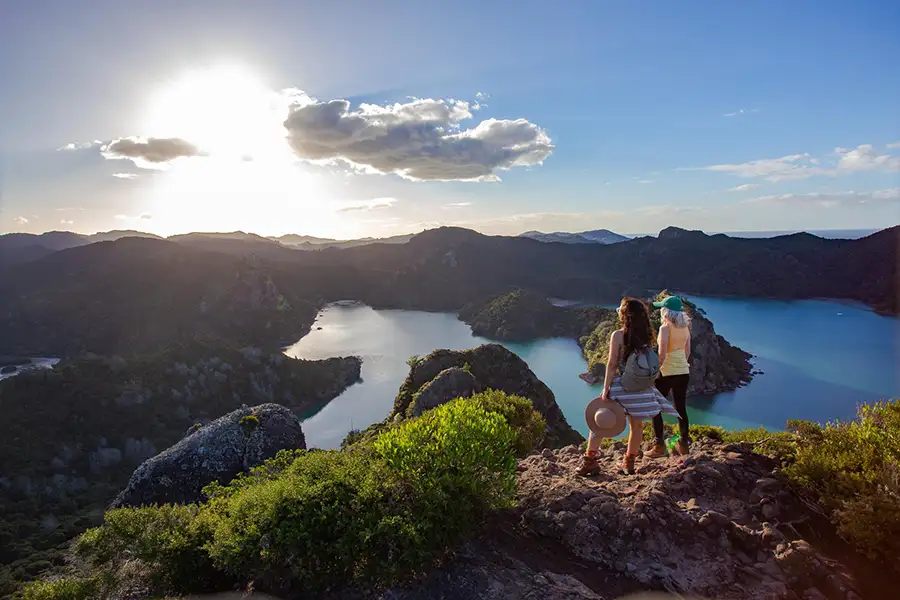
Duke’s Nose is one of those climbs that looks intimidating from below and feels utterly rewarding from the top. Rising sharply above Lane Cove in the heart of Whangaroa Harbour, this jagged volcanic plug offers one of Northland’s most dramatic short summit walks. It’s steep, exciting, and the metal grab rails add a proper sense of adventure. The views from the top, across the maze of harbour coves, mangrove inlets, and volcanic peaks, are unforgettable.
It’s a climb for confident, fit walkers who don’t mind a bit of exposure. Many people combine it with the Wairakau Stream Track or arrive by boat for a focused summit mission from Lane Cove.
Location and Access
Duke’s Nose sits above Lane Cove in the inner reaches of Whangaroa Harbour. There’s no road access to the base, so you have two main options for getting there:
Walk in via Wairakau Stream Track: It’s about 5km one way from the Campbell Road carpark. Budget 1.5 to 2.5 hours to reach Lane Cove Hut, where the Duke’s Nose track begins.
Arrive by boat or kayak: Lane Cove has a small jetty, and some people arrange a boat shuttle from Whangaroa Harbour. This saves the walk in and lets you focus on the climb itself.
Lane Cove Hut is the common starting point for the ascent, so whether you’ve walked or paddled in, that’s where you’ll begin the climb.
The Track
From Lane Cove Hut, the climb to the summit takes 30 to 45 minutes depending on fitness and how carefully you move on the exposed sections. It’s a short distance, but it’s steep and demanding.
The track is graded moderate to hard. You’ll be scrambling over exposed rock slabs, using fixed metal grab rails for balance and support, and navigating some narrow sections with significant drop-offs. It’s not technically difficult if you’re comfortable with heights and have reasonable fitness, but it’s not suitable for young children or anyone who gets nervous on exposed terrain.
Forest Approach
The track starts in shaded bush, climbing steadily through roots and uneven ground. It’s a warm-up for what’s coming. Early on, you’ll catch glimpses of the volcanic cliffs above and the sheltered harbour arms below, giving you a sense of the landscape you’re about to climb into.
Exposed Rock and Grab Rail Sections
Once you leave the bush, things get steeper. You’re now on bare rock slabs, and the gradient kicks up sharply. Fixed metal grab rails are bolted into the rock to help you haul yourself up the steepest pitches. The rails are solid and make the climb manageable, but the rock can be slippery after rain, and footing requires care.
Take your time here. Use the rails confidently, test your footing before committing your weight, and keep three points of contact where possible. Descending this section feels steeper than going up, so note the route as you climb.
Final Ridge
The last section opens onto a narrow rocky ridge leading to the summit viewpoint. The exposure becomes more obvious here (drop-offs on both sides) but the path is clear. In the final few metres, the views suddenly expand, and the full sweep of Whangaroa Harbour unfolds below you.
Summit Experience
The summit of Duke’s Nose is small, but the views are huge. You get a full panorama over Whangaroa Harbour’s maze of coves, the dark green mangrove inlets, and the line of volcanic peaks that define this landscape. On a clear day, you can see the Cavalli Islands offshore and the outer coastline stretching north.
The summit space is limited, so be mindful of your footing and watch the drop-offs. Wind can pick up quickly, even on otherwise calm days, so hold onto hats and keep a hand free for balance.
The best times to climb are early morning, when the light is soft and the air is still, or late afternoon, when the low sun casts dramatic shadows across the harbour. Midday can be hot and harsh, and the views lose some of their depth in the flat light.
Nature and Geology
Whangaroa’s volcanic landscape was formed thousands of years ago, and the jagged rock spires like Duke’s Nose are remnants of that ancient activity. Erosion has carved out the harbour’s deep inlets and steep-sided peaks, leaving behind the dramatic scenery you see today.
Birdlife is active around Lane Cove and in the bush below the summit. Tūī are common, and you’ll hear the call of pīwakawaka (fantails) as they flit through the trees. Kererū are often spotted in the taller bush, and coastal species like shags and gulls work the harbour edges.
The contrast between the lush valley vegetation below and the exposed rocky summit is striking. It’s a climb that takes you through multiple layers of the landscape in a short distance.
Culture and History
Whangaroa Harbour has long been significant to local hapū, and the sheltered bays and surrounding forests were important for food gathering, travel, and settlement. The harbour’s natural protection made it a key location, and the landscape holds deep cultural meaning.
The area has been used and valued by Māori for centuries, and the connections to the land and water continue today. As you walk and climb, remember that this is more than just a scenic viewpoint. It’s a place with layers of history and cultural significance. Respect the environment, stay on the formed track, and treat the landscape with care.
Safety and Conditions
The grab rails and rock surfaces can be slippery, especially after rain. If it’s been wet recently or rain is forecast, postpone the climb. The exposure and steep sections become genuinely risky in poor conditions.
Even on fine days, the summit can be windy. Carry a light jacket or warm layer, even if it feels warm at Lane Cove. The temperature drops and the wind picks up once you’re on the exposed rock.
Descending feels steeper than climbing up. Take your time, face inwards on the steepest sections, and use the grab rails to control your descent. It’s not the time to rush.
Mobile reception is generally available at the higher points, but it can drop out in parts of the valley on the way in.
Tips for Walkers
What to bring: Sturdy walking shoes or boots with good grip, at least a litre of water, snacks, sun protection (hat and sunscreen), and a light jacket. If you’re walking in via Wairakau Stream, bring lunch and extra water for the full day.
Dogs: Not permitted. The steep sections and conservation values make this unsuitable for dogs.
Suggested combinations: The climb works well as part of a day trip via the Wairakau Stream Track. Walk in, climb Duke’s Nose, have lunch at Lane Cove, and walk back out. Alternatively, stay overnight at Lane Cove Hut and climb the next morning when you’re fresh. Some people arrange a boat shuttle to or from Lane Cove, which turns it into a one-way walk and gives you a different perspective on the harbour.
Boat shuttles: Ask around in Whangaroa village for current options. A boat pickup from Lane Cove saves you the walk back and adds a nice water-based finish to the day.
Nearby Add-Ons
Lane Cove itself is worth exploring. The shoreline is peaceful, and when the tide is right, it’s a good spot for a swim. The sheltered water and bush backdrop make it a lovely place to relax after the climb.
The full Wairakau Stream Track offers a contrasting forest experience: lush, green, and low-key compared to the exposed rock scramble up Duke’s Nose. If you’re spending a few days in the area, St Paul’s Rock is another striking Whangaroa viewpoint and makes for a good comparison.
A Dramatic Climb Above Whangaroa Harbour
Duke’s Nose is a short, exhilarating climb that delivers some of the Far North’s most iconic views. It’s steep, requires confidence on exposed rock, and the metal grab rail sections add a real sense of adventure. The summit panorama over Whangaroa Harbour is worth every metre of the climb.
Approach it with care, especially in or after wet weather, and take your time on the descent. Treat the landscape with respect, enjoy the challenge, and don’t rush the experience. It’s one of those climbs that stays with you.
Map
Sorry, no records were found. Please adjust your search criteria and try again.
Sorry, unable to load the Maps API.
