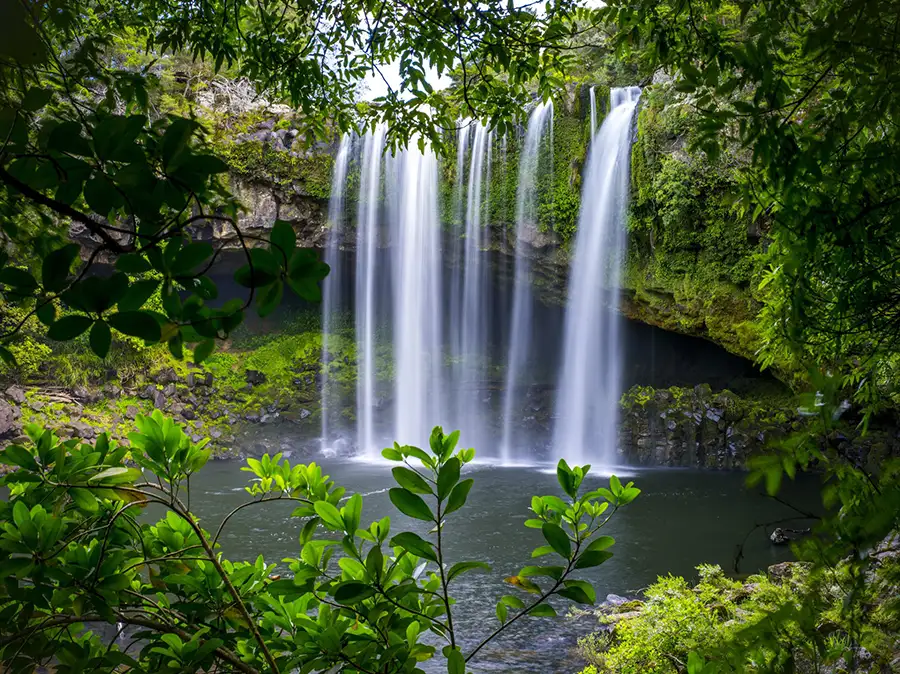

Rainbow Falls is Kerikeri’s signature waterfall. At 27m (89 feet), this wide curtain of water plunges over a basalt cliff into a churning pool below, and it’s one of those places that actually lives up to the hype.
The real appeal here is the combination: dramatic waterfall, stupidly easy access. Car park to viewing platform in 5 to 10 minutes on a proper path. This means families with toddlers, grandparents, anyone really, can get here without the usual “is it worth it?” debate that comes with longer walks.
You’ll see photographers setting up tripods for that perfect shot, kids running ahead on the track, tourists ticking it off their Northland list. On sunny days, mist from the falls creates rainbows in the right light (hence both the English and Māori names: Waianiwaniwa, “waters of the rainbow”). The viewing platforms give you excellent perspectives on the water’s power and the native bush pressing in around it.
Want more than a quick visit? The falls connect to the Kerikeri River Track, which runs downstream to Wharepuke Falls and eventually to the historic Stone Store Basin in town.
Location and Access
Rainbow Falls sits on the Kerikeri River about 3km southwest of Kerikeri township. Most people drive there via Rainbow Falls Road, which dead-ends at a large car park with toilets. From Kerikeri, just follow the signs. Takes about 5 minutes and the route’s well-marked.
The car park holds 50-plus vehicles and rarely fills completely, though summer holidays and long weekends get busy between 10am and 2pm. There are toilets here, and that’s it for facilities.
You can also reach the falls via the Kerikeri River Track if you’re up for a longer walk. From Stone Store Basin in central Kerikeri, it’s about 5km one way following the river upstream through native bush, passing Wharepuke Falls along the way. Makes a decent half-day walk if you want more than just the waterfall.
The short track from the car park to the main viewing platforms is well-maintained and genuinely easy for most people. Not wheelchair accessible due to steps and uneven surfaces, but the gradient’s gentle and the path is wide.
The Track
The main track from car park to viewing platforms covers roughly 200m and takes 5 to 10 minutes at a casual pace. Well-formed gravel, steps in places, handrails where needed.
Multiple viewing points give you different perspectives. The upper lookout provides a head-on view from slightly above. You get the full sense of the drop and the width of that water curtain. Mid-level platforms bring you closer, and short side paths lead to the river edge both above and below the falls.
Spend 15 minutes taking photos from the main platform, or explore the various viewpoints for an hour or more. Families usually hang around for 30 to 45 minutes, giving kids time to explore safely and everyone a chance to see the falls from different angles.
Several options extend the walk if you want more. Follow the track downstream towards Wharepuke Falls, or explore upstream paths above the falls. These extensions aren’t heavily promoted but they’re obvious once you’re there, and they get you deeper into the forest and river environment.
The paths near the falls are secure with fencing and barriers where needed. The viewing platforms are solid and well-maintained, safe even when wet.
The Waterfall
Rainbow Falls drops 27m in a single, even cascade across a width of 10 to 15m. That dramatic curtain effect that makes certain waterfalls so photogenic. The basalt cliff face is dark and often covered in moss and ferns, creating a lush green backdrop against the white water.
The flow is strong year-round. Even during dry summer periods, there’s enough volume to keep it impressive. After heavy rain? The falls become genuinely powerful. Water thunders down with enough force that you feel the vibration and hear the roar from the platforms.
The rainbows (when they appear) are most reliable in the morning when the sun angle’s right, though it depends on conditions. Not guaranteed, but spectacular when it happens.
Best viewing times for photography are early morning or late afternoon when the light’s softer and comes in at better angles. Midday sun creates harsh shadows and blown highlights. Overcast days actually work well too. Even light that captures the full tonal range without the contrast problems.
Common photo angles include the classic head-on view from the upper platform, side angles showing the profile and the pool below, and close-ups of the water texture and vegetation. Bring a polarizing filter if you’re serious about photography. It cuts glare from wet rocks and makes the water look better.
Kerikeri River
Above the falls, the river flows calmly through native bush, clear enough to see the bottom in shallow sections. The pools look inviting, but swimming immediately above a 27m drop is obviously stupid and signs warn against it.
Below the falls, the water churns in the plunge pool before calming downstream. The pool’s colour ranges from clear turquoise in stable conditions to brown and murky after heavy rain. Both versions have their appeal – the power after rain is impressive, while the clarity in dry periods lets you appreciate the detail.
Native Vegetation
The bush surrounding the falls is typical Northland lowland forest. Regenerating in places, well-established in others. Kānuka and mānuka dominate the drier ridges, while wetter gullies support tree ferns and various other fern species.
The rock faces around the falls are covered in moss and small ferns, creating that lush, dripping appearance characteristic of New Zealand’s wetter forests. The constant moisture from spray and the sheltered environment create ideal conditions for these species.
The forest provides good shade even on hot days, keeping the track comfortable when the car park’s baking. That shade also means the track stays damp longer after rain. Expect potentially muddy conditions if it’s been wet recently.
Longer Walk Option: Connection to Kerikeri River Track
For walkers wanting more, the Kerikeri River Track provides an excellent extension. From Rainbow Falls, you can follow the track downstream for about 5km to reach Stone Store Basin in central Kerikeri, or walk shorter sections to places like Wharepuke Falls or the Fairy Pools.
The extended route takes you through attractive native bush following the river as it meanders through the landscape. You’ll pass swimming holes, smaller cascades, and forest sections that see far fewer visitors than Rainbow Falls.
Highlights include Wharepuke Falls (smaller but appealing in its forest setting) and the Fairy Pools (popular with locals for swimming). The track eventually reaches the historic Stone Store Basin with its mission-era buildings and heritage gardens.
Time matters if you’re planning the longer walk. Rainbow Falls to Stone Store Basin is about 5km one way, taking 1.5 to 2 hours at a comfortable pace. You’ll need transport at the other end or walk back. Making it a 10km return journey and a half-day commitment.
Most people walking the full track start from Stone Store and walk upstream to Rainbow Falls, then return the same way or arrange pick-up. Starting from Rainbow Falls and walking downstream works equally well, just reversed.
Seasonal Interest
River levels respond quickly to rain. After heavy rainfall, the volume coming over the falls can increase dramatically within hours, changing the character completely. The increased power is impressive, though it makes the water murky and less photogenic.
Summer brings lush foliage and maximum canopy cover, keeping forest sections cool. The river tends to run clearer during stable weather patterns. Winter offers crisp air, clearer light for photography, and quieter tracks with fewer visitors. The falls remain impressive year-round. This isn’t a waterfall that disappoints in dry seasons.
Cultural and Historical Context
The Kerikeri River and surrounding area hold deep significance for Māori, particularly Ngāpuhi iwi who have occupied this region for hundreds of years. The river provided essential resources: fresh water, abundant eels and fish, water for irrigating cultivations. The name Waianiwaniwa connects the falls directly to Māori observation and naming based on natural characteristics.
The wider Kerikeri River Track network passes through landscape that supported substantial Māori communities before European arrival. Fertile land, reliable water, access to both river and sea resources. All made this an attractive area for settlement.
European history in the area centres on the mission station established at Kerikeri Basin in the 1820s. The Stone Store and Mission House represent that early colonial period and the complex interactions between missionaries and Māori during rapid cultural and economic change. While these historic sites are several kilometres downstream from Rainbow Falls, they’re part of the same river system and landscape.
Walking the river tracks and visiting the falls connects you to both natural and cultural history. The significance of places like Waianiwaniwa extends beyond scenic value. They represent ongoing relationships between people and landscape stretching back centuries.
Safety and Track Conditions
The viewing platforms are fenced and secure. Stay behind the barriers. Don’t climb fences to get closer or attempt better photos. People have been injured and killed at New Zealand waterfalls through misjudging risks, and the barriers exist for good reason.
Rocks near the river can be extremely slippery, particularly in the spray zone where constant moisture encourages moss and algae. If you’re exploring beyond the main platforms, watch your footing and wear appropriate footwear.
After heavy rain, access paths can be muddy and tree roots become slippery. The track remains usable, but you’ll want decent shoes and should take extra care on slopes or steps.
Swimming is strongly discouraged near the falls. The currents in the pool below are unpredictable and potentially dangerous, and the turbulence from water falling 27m can trap swimmers. There are much safer swimming spots along the river where locals go. Stick to those rather than risking the pool directly below the falls.
Don’t attempt to climb around the falls on the rock faces. What looks climbable from below often isn’t, and the consequences of a slip near waterfalls are severe.
Tips for Walkers
Comfortable walking shoes are adequate for the short track from the car park. You don’t need boots, but jandals or sandals aren’t ideal if it’s muddy. Trail runners or casual walking shoes work fine.
Bring your camera or phone. Everyone takes photos here, and the falls are genuinely photogenic from multiple angles. A polarizing filter helps if you’re shooting with a proper camera, and consider a tripod if you want to experiment with long exposures that turn the water to silk.
Water is sensible if you’re planning to explore beyond the immediate falls area or walk sections of the river track. For just the quick visit to the main platforms, you probably won’t need it.
Insect repellent can be useful, particularly for sandflies. The forest environment and proximity to water means they’re present, especially in still, warm conditions. Not always a problem, but when they are, they’re annoying enough to spoil your visit if you’re unprepared.
Dogs are generally permitted on lead. Check current signage at the car park for any restrictions. Keep dogs on lead throughout and clean up after them.
Best times to visit for photography are early morning or late afternoon for light quality, and these times tend to be quieter. Midday is busiest, particularly during school holidays and long weekends. Weekdays are generally quieter than weekends if you have flexibility.
The short track is suitable for many users, though not fully accessible. There are steps in places and some uneven surfaces that make wheelchair access difficult. The gradient’s gentle enough that most people manage without difficulty, but it’s not flat or paved throughout.
Nearby Add-Ons
Rainbow Falls combines well with other Kerikeri attractions for a full day. The Stone Store and Mission House are essential for anyone interested in New Zealand history, providing context for early European settlement and Māori-European interactions in the 1820s and beyond.
Kororipo Heritage Park, adjacent to Stone Store Basin, protects the site of a significant historical pā and offers walking tracks and interpretation panels explaining the area’s Māori history.
Kerikeri township has an excellent food scene with numerous cafés, restaurants, and artisan producers. The town is known for subtropical fruit growing, and you’ll find roadside stalls and orchards selling fresh produce seasonally. The Sunday markets are worth visiting for local crafts, food, and community atmosphere.
Other nearby walks include Wharepuke Falls (covered in its own article), which is closer to town and offers a different forest and river experience. The full Kerikeri River Track connecting Rainbow Falls to Stone Store Basin is an obvious extension if you want more walking.
Aroha Island Ecological Centre, a short drive from Kerikeri, offers pest-free island walking with excellent birdlife and is worth considering for nature-focused visitors.
A Kerikeri Must-See
Rainbow Falls earns its status as one of Kerikeri’s iconic attractions. Easy access, dramatic scenery, genuine year-round appeal. It works for virtually everyone, from families with toddlers to serious photographers.
Yes, it’s popular and you won’t have it to yourself during peak times. But that’s a reasonable trade-off for such easy access to a genuinely impressive waterfall. The falls deliver regardless of season or weather. Powerful after rain, elegant in dry periods, occasionally producing those rainbows that explain their name.
The short walk means you can fit this into almost any itinerary without major time commitment, while the connection to the longer river track provides options for more substantial walking if you’re keen.
For first-time Bay of Islands visitors, Rainbow Falls is essential. For repeat visitors and locals, it remains worth doing occasionally, particularly in different seasons or weather conditions that show the falls in varying moods.
Enjoy the falls, take your photos, respect the barriers and signage, and care for the surrounding environment. Waianiwaniwa has been impressing people for centuries. With appropriate care, it will continue doing so for centuries more.
Map
Sorry, no records were found. Please adjust your search criteria and try again.
Sorry, unable to load the Maps API.
